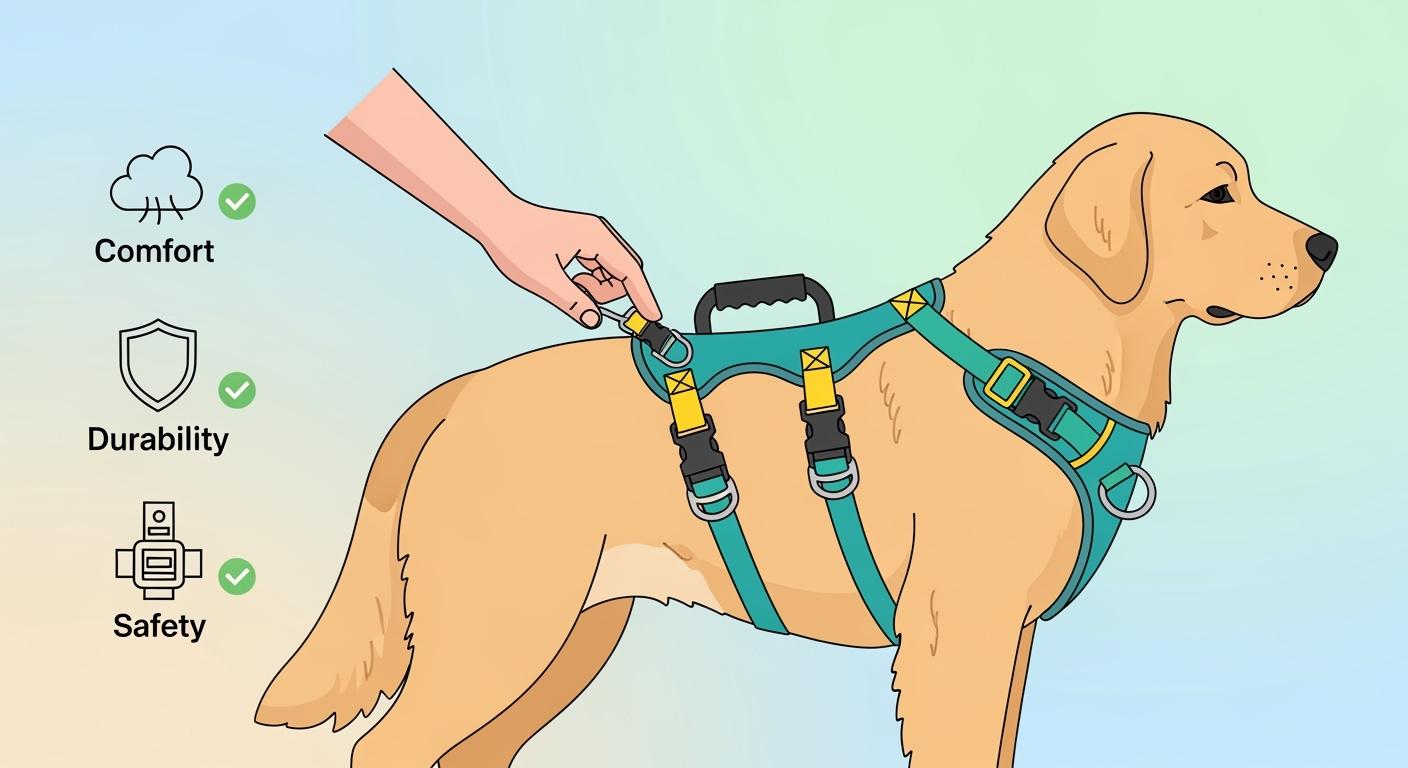
A harness for large dog walks often includes features like front clips, top handles, or added coverage, but the real question is which ones actually make daily walks easier. Those features should not be judged by how many the harness has. They should be judged by what they actually do on a real walk: help the handler guide the dog, keep the harness readable, and protect comfort without adding unnecessary heat, weight, or restriction.
This page is not a measuring tutorial. For large dogs, the better question is whether each added feature has a clear job. A front clip should help with redirection. A handle should help with brief close guidance. Coverage should spread pressure without turning the harness bulky. If a feature does not make the walk easier to manage or easier for the dog to move in, it may only be extra hardware.
Clip Points Should Match the Walk, Not the Label
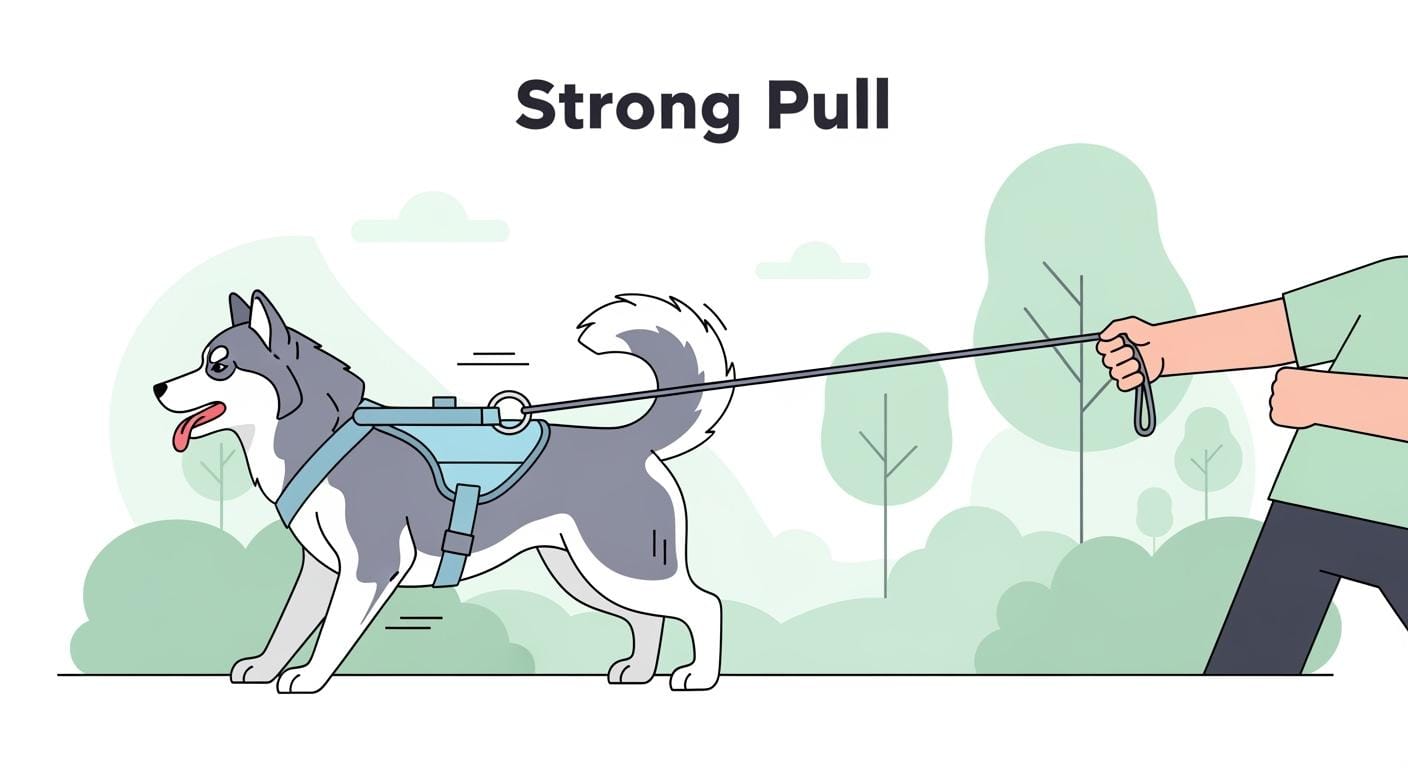
Clip position changes how the harness feels when a large dog moves into leash pressure. A front clip can help with redirection when a dog surges forward. A back clip usually feels simpler for calmer walks. A dual-clip setup gives more options, but only if the extra hardware stays balanced and does not make the front of the harness feel busy.
| Clip setup | What it is for | What to watch |
|---|---|---|
| Front clip | Redirecting forward pressure and helping with closer guidance | The chest area must stay clear of the shoulders |
| Back clip | Simple everyday walking when the dog is already manageable | It gives less help if the dog leans hard into the leash |
| Dual clip | Switching between front guidance and simpler back-clip walking | Extra hardware can feel bulky if the harness is not balanced |
Do not choose a clip point only because it sounds stronger. Choose it because it matches the dog’s real walking pattern. If a large dog already walks calmly, extra steering features may not add much. If the dog often surges or changes direction quickly, the clip setup needs to help you respond without making the harness crowd the chest.
If you need a broader comparison before choosing harness type, start with the best dog harness guide. It helps separate general harness choices from the extra-feature decisions this page focuses on.
Handles Should Help Brief Control Moments
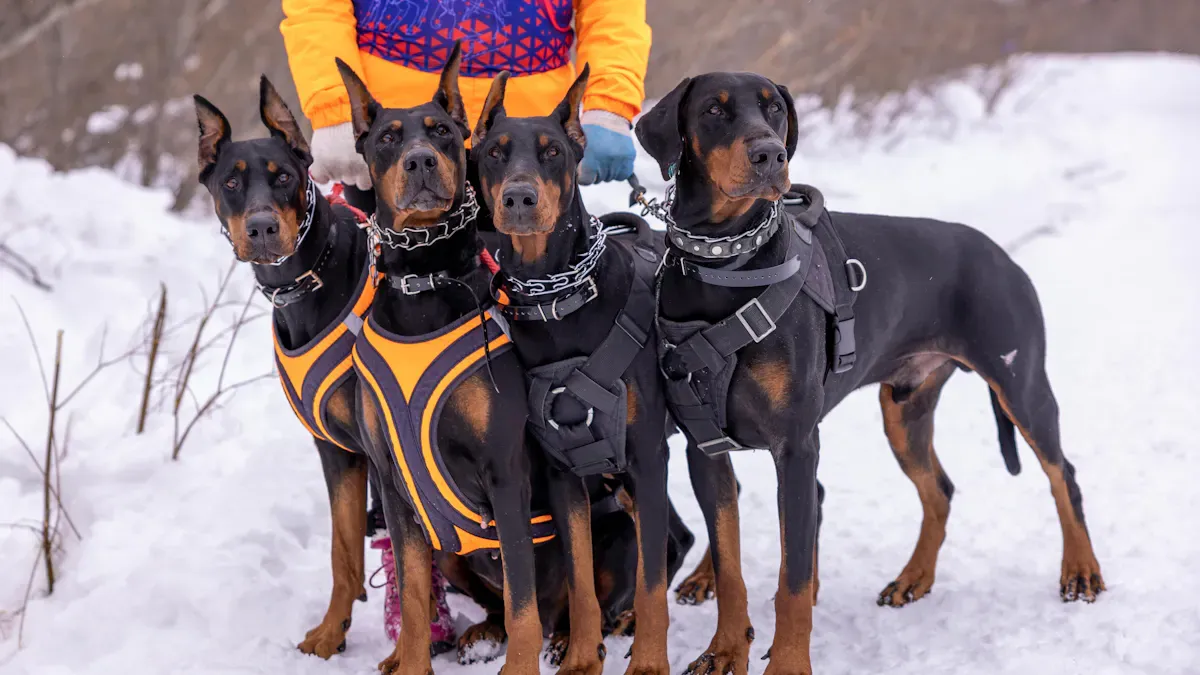
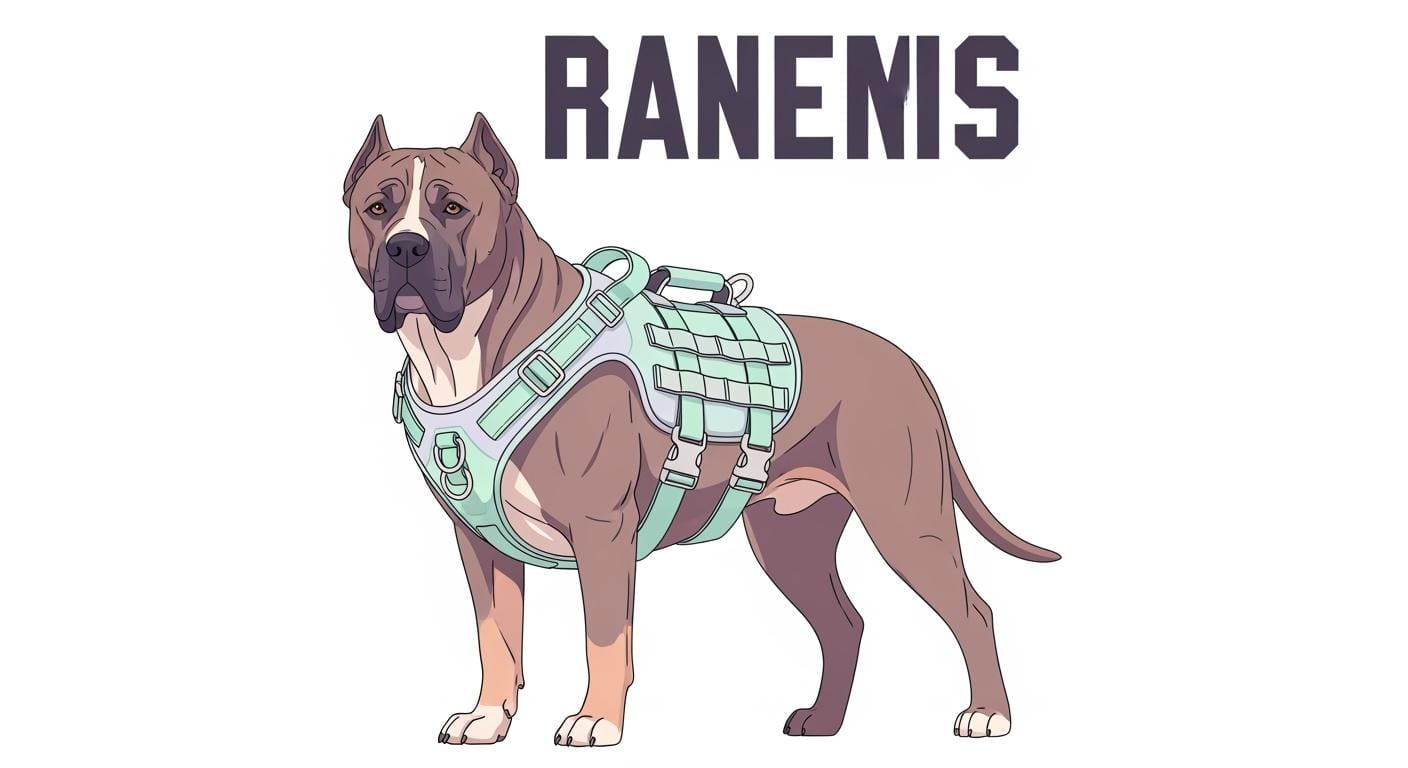
A top handle can be useful on a harness for large dog walks, but it has a narrow job. It should help with short close guidance near stairs, doorways, crowds, car doors, or tight paths. It should not replace normal leash handling, and it should not be treated as a lifting feature.
A useful handle is easy to find without searching, large enough to grip cleanly, and stable enough that it does not flop or twist the harness when you touch it. If the handle sits too far back, folds under your hand, or pulls the harness off balance, it may look helpful but feel awkward during real use.
- Use the handle for brief positioning moments, not long carrying or constant pulling.
- Check whether the handle stays reachable while the dog is moving.
- Make sure the handle does not add a stiff block that bounces or shifts on the dog’s back.
- Stop relying on the handle if it makes the harness twist, lift, or feel unstable.
Coverage Should Support Movement, Not Hide It
Large-dog harnesses often use more coverage to spread pressure and create a steadier feel. That can help when the coverage sits cleanly across the chest and body. But more coverage can also create heat, weight, slow drying, and shoulder restriction. The goal is not maximum material. The goal is useful contact in the right places.
| Coverage choice | Can help when | Can hurt when |
|---|---|---|
| Wider chest panel | It spreads pressure without crowding the front legs | It touches the inside of the legs or blocks stride |
| More padding | It softens real contact points | It traps heat, sweat, or moisture |
| Longer body coverage | It keeps the harness stable on a strong dog | It feels heavy or stiff after a short walk |
| Extra hardware | It gives a clear handling purpose | It adds weight without improving the walk |
Watch the dog after a normal walk, not only while standing still. Shortened steps, shoulder crowding, hot padding, bouncing hardware, or repeated rubbing are signs that the extra coverage is not helping enough. A simpler harness may work better if the added structure creates more problems than it solves.
How to Judge Extra Features on a Real Walk
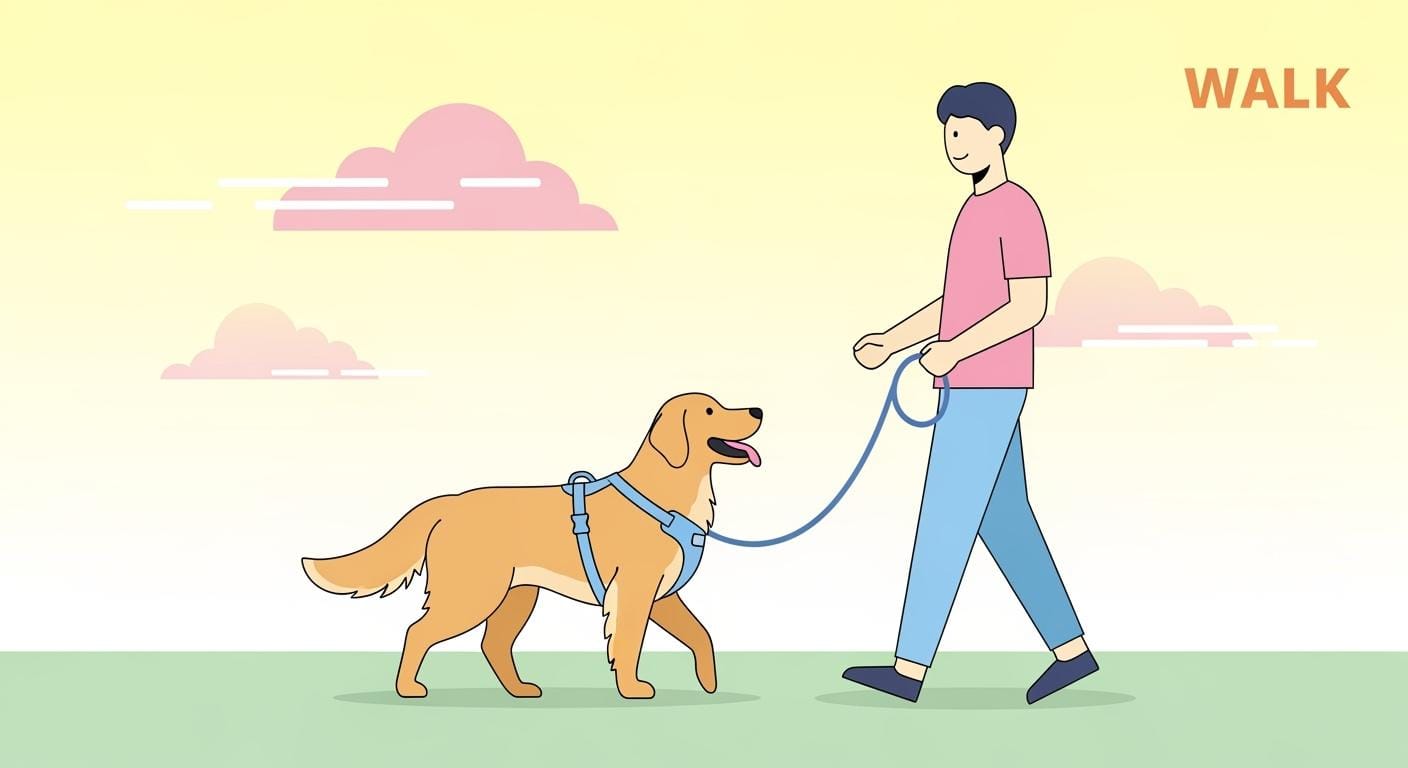
You want a harness for large dog use that stays easy to read after movement. The real check is not whether the harness has every feature. It is whether the feature still makes sense after the dog walks, turns, stops, and leans into normal leash pressure.
| Feature | Pass sign | Warning sign |
|---|---|---|
| Front clip | Helps guide the dog without tangling or crowding the chest | Pulls the front panel into the shoulders |
| Back clip | Feels simple and stable for calm walking | Gives too little help for the dog’s walking behavior |
| Dual clip | Gives useful route-by-route flexibility | Adds hardware you rarely use |
| Top handle | Easy to grab for short close guidance | Bounces, twists, or encourages overuse |
| Coverage | Spreads pressure while keeping movement natural | Adds heat, weight, or shoulder restriction |
If leash setup also affects how the harness behaves, use this dog harness and leash set guide to check whether leash length, clip choice, and handling routine are making the harness feel better or worse.
When a Simpler Harness Is the Better Choice
Extra features are only useful when they solve a real walking problem. A simpler harness may be better when your dog walks calmly, overheats easily, dislikes stiff gear, or does not need multiple clip options. The right large-dog harness should make handling clearer and movement easier, not make every walk feel like more equipment to manage.
- Choose fewer features when your dog does not need extra redirection or close-hold help.
- Avoid heavy coverage if the dog becomes hot, stiff, or slower after short use.
- Do not choose dual clips or handles just because they look more advanced.
- Keep the setup easy to inspect, adjust, clean, and repeat.
Häufig gestellte Fragen
Does every harness for large dog use need a front clip?
No. A front clip can help with redirection, but a calm large dog may do better with a simpler back-clip setup that does not add extra chest hardware.
Is a top handle useful on a large dog harness?
It can be useful for brief close guidance near stairs, doors, crowds, or tight paths. It should not be used for lifting or replacing normal leash handling.
Can too much coverage make a harness harder to use?
Yes. Extra coverage can add heat, weight, drying time, and shoulder restriction. More material is only useful when it improves stability without hurting movement.
Should I choose the harness with the most features?
No. Choose the features you will actually use. Unused clips, bulky handles, or extra padding can make the harness harder to adjust and inspect.
How do I know if a simpler harness is better?
A simpler harness is often better when your dog walks calmly, overheats easily, moves more freely in lighter gear, or does not need multiple control options.