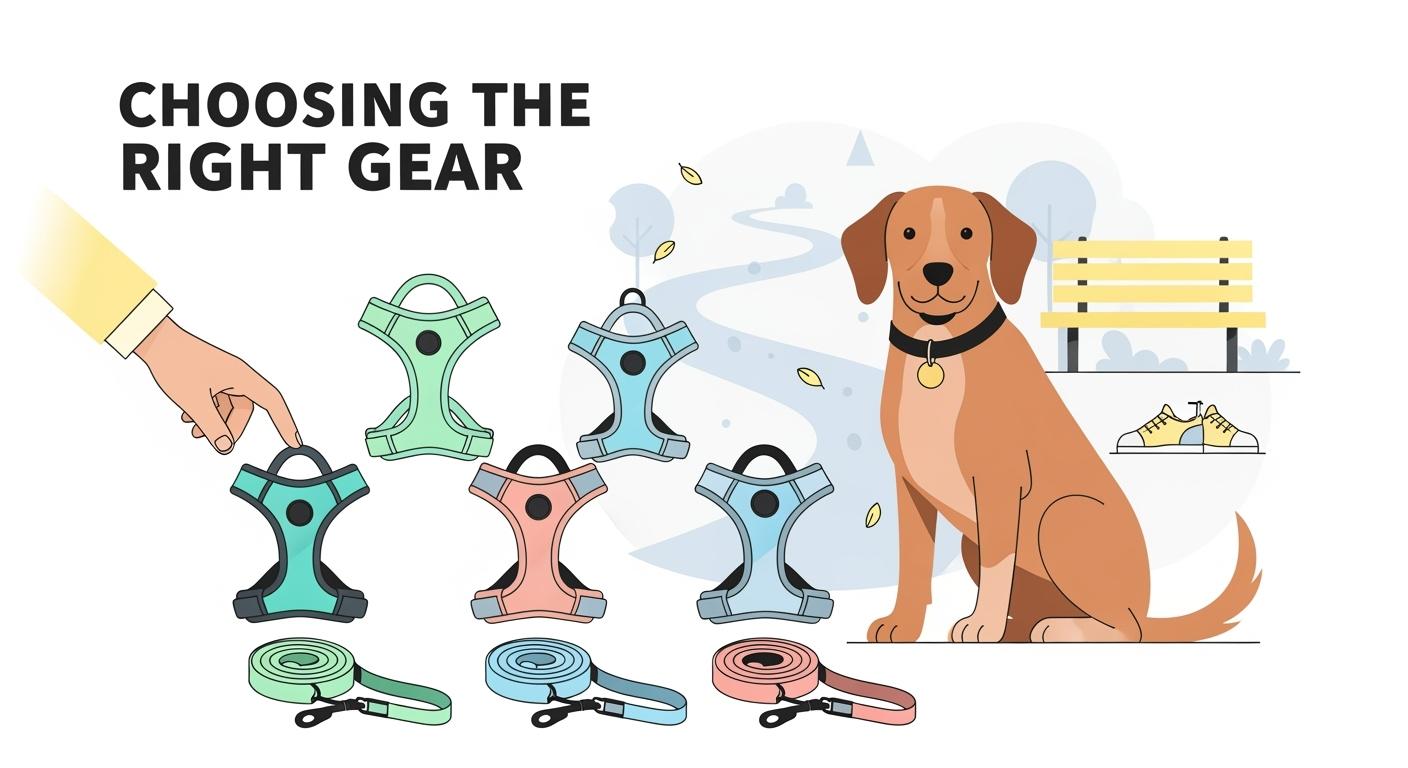
If walks feel chaotic, it’s usually not because the leash is “bad.” It’s because the setup doesn’t match the environment (crowds vs open paths), the dog’s pulling pattern, or the handler’s reaction time. This Cluster guide shows you how to choose a harness clip strategy and leash type, then confirm control with quick fit checks.
If you’re comparing options, start with the dog leash category and pick a leash style that matches your route and your dog’s behavior.
Quick chooser: match the setup to the walk
| Walk scenario | Harness clip direction | Leash direction | Common problem if mismatched |
|---|---|---|---|
| Busy sidewalks / crossings | Front clip or dual clip (stable fit required) | Standard or double-handle for close control | Late reactions and lunges |
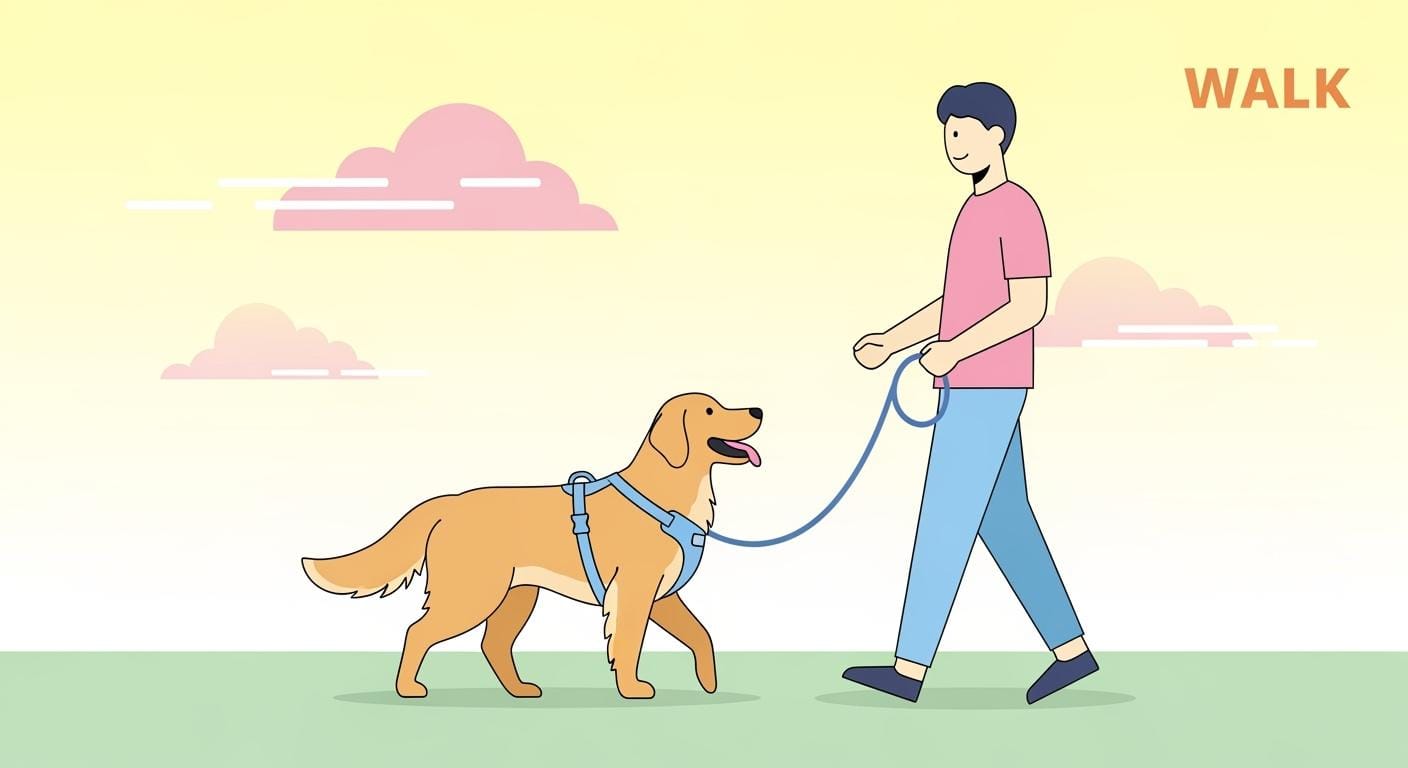
| Calm neighborhood walks | Back clip for smoother feel | Standard leash | Dog “leans in” if it’s a strong puller |
| Training in open areas | Stable fit (geometry matters) | Long line (space required) | Tangles and end-of-line jolts |
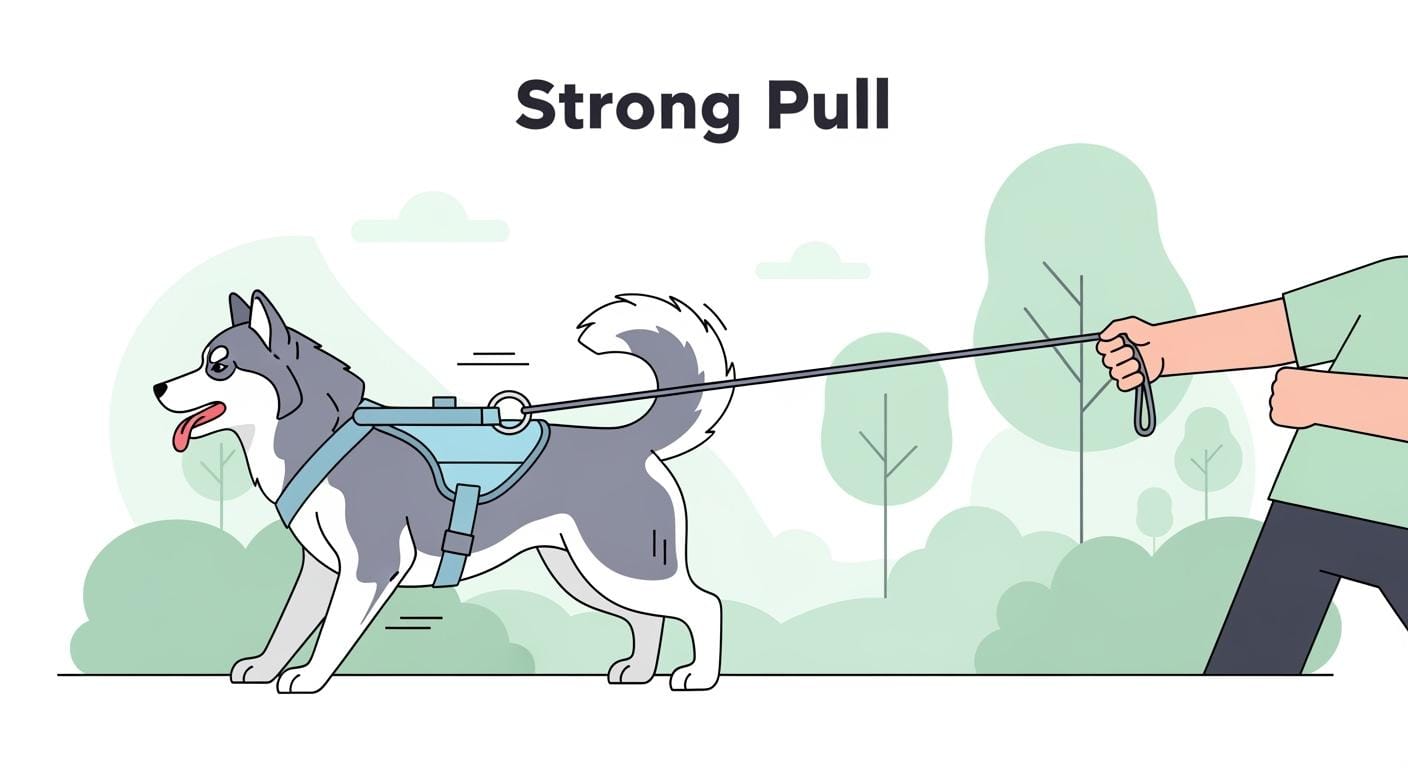
| Strong pullers | Front clip + stable geometry | Double-handle or sturdy webbing | Back-clip-only setups feel out of control |
If you want one reference that combines leash length guidance with harness fit and comfort checks, use this harness and leash set fit guide.
Harness clip choices: front, back, dual
Front clip (pull control)
- Best for: training phases, busy sidewalks, and reactive moments.
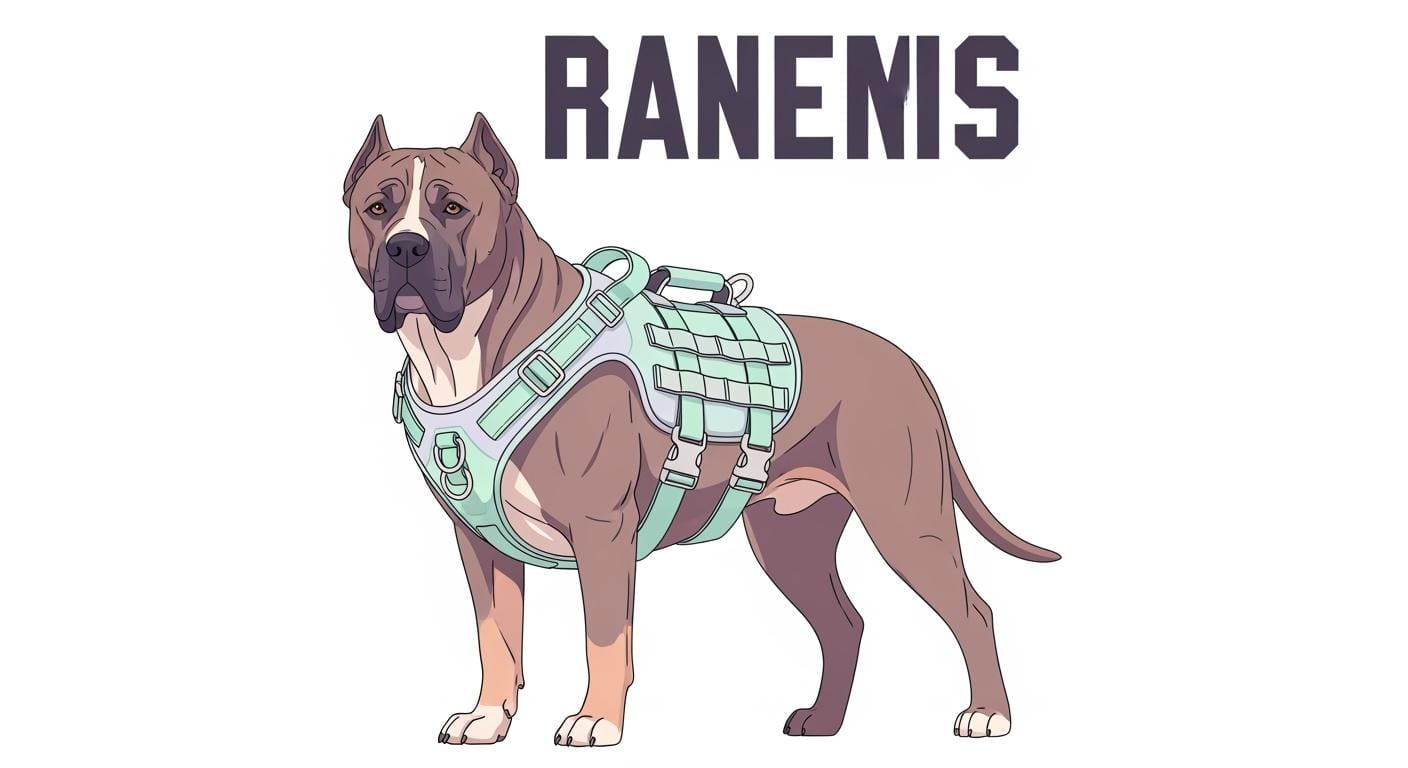
- Watch out for: twisting and armpit rubbing if the harness does not stay centered.
- Quick test: after a few turns, the front clip stays near center and straps don’t migrate.
Back clip (comfort and simplicity)
- Best for: calm walkers and simple routes.
- Watch out for: strong pullers “leaning in” and pulling harder.
- Quick test: straps don’t slip longer after a few pulls; the harness stays aligned.
Dual clip (flexibility)
- Best for: switching control by environment.
- Watch out for: confusing setup and inconsistent use.
- Quick test: both clip points are reinforced and remain aligned during movement.
Leash choices that change outcomes
- Standard leash: predictable distance; good default for daily walks.
- Double-handle leash: faster close control in crowds; helps prevent sudden lunges.
- Long line: useful for open spaces; avoid near traffic and heavy foot traffic.
- Hands-free: comfortable for steady pacing; safer when responses are reliable.
Measuring and fit: the checks that prevent twisting and rubbing
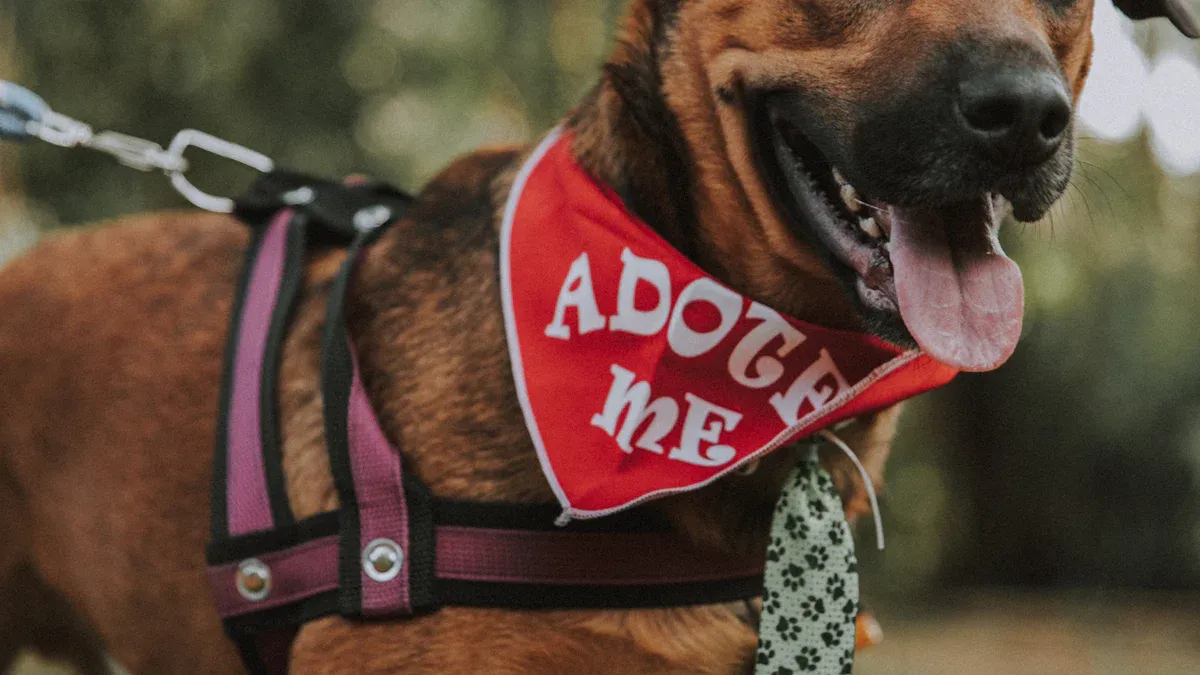
- Chest girth: widest part behind the front legs.
- Neck: where a collar would sit.
- Two-finger rule: snug straps; no pinching; no gaping.
- Rotation test: after a short walk, clip stays centered; no harness twist.
- Rub-zone check: straps stay behind the front legs; no armpit migration.
If you need a deeper sizing baseline (materials, structure, and fit cues across harness styles), see the best dog harness guide.
Häufig gestellte Fragen
Why does my front-clip harness twist so much?
Twisting usually means the harness isn’t stable on the body (too loose, wrong geometry, or straps migrating). Refit with the two-finger rule, then retest after a few turns.
Is a longer leash better for training?
Not always. A long line helps in open spaces, but it creates slack and tangle risk in busy areas. Start with a length that lets you react quickly, then increase distance only when the environment is safe.
What’s the fastest way to get close control in crowds?
Use a leash setup that lets you shorten distance quickly (for example, a leash with a close-control handle) and switch to a front-clip or dual-clip strategy if pulling is intense.
How do I know if rubbing is happening?
Look for redness or hair thinning near armpits and the sternum. Rubbing often comes from rotation and strap migration, not only tightness.
What if my dog is between two harness sizes?
Choose the size that stays stable and keeps shoulder movement free. Too large often twists and rubs even if it “fits.” Use the sizing logic in the best dog harness guide to confirm measurements and fit rules.