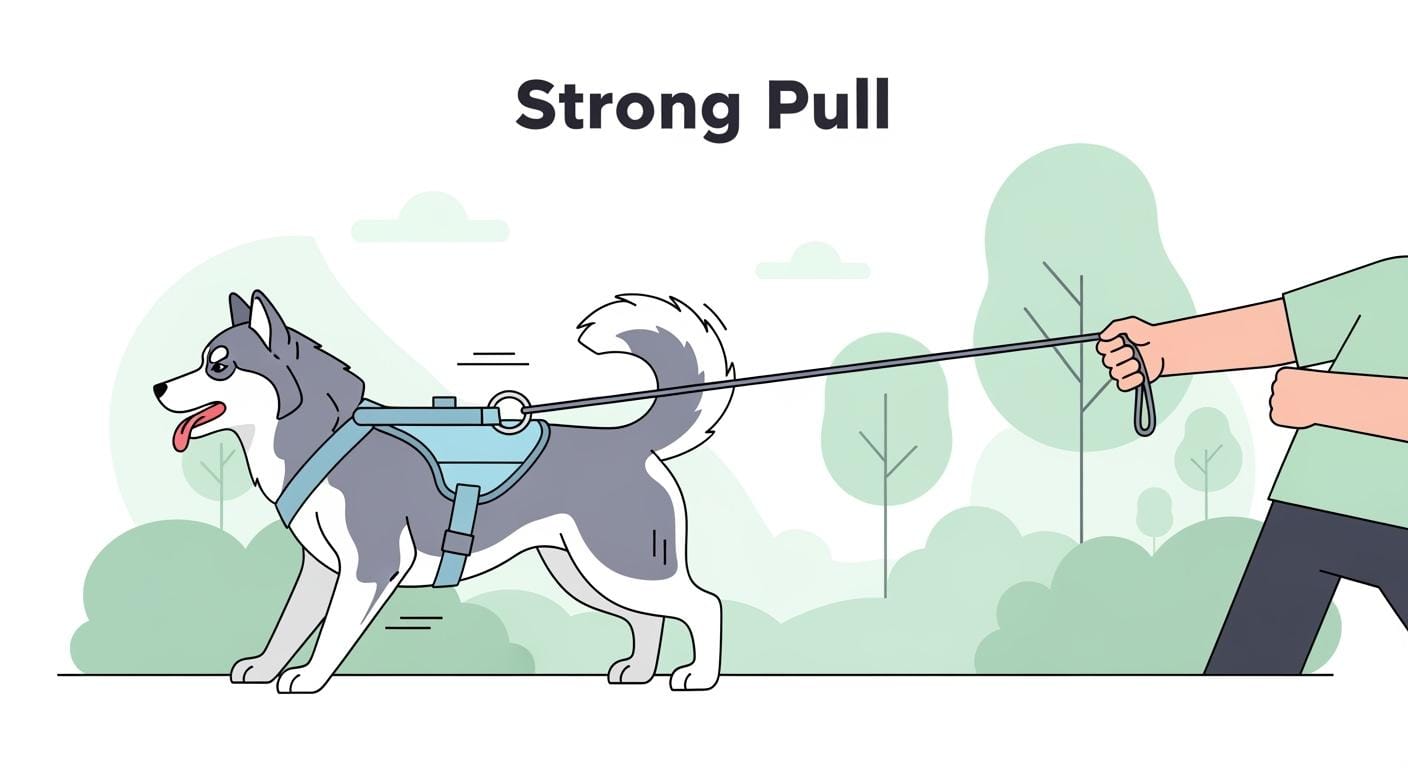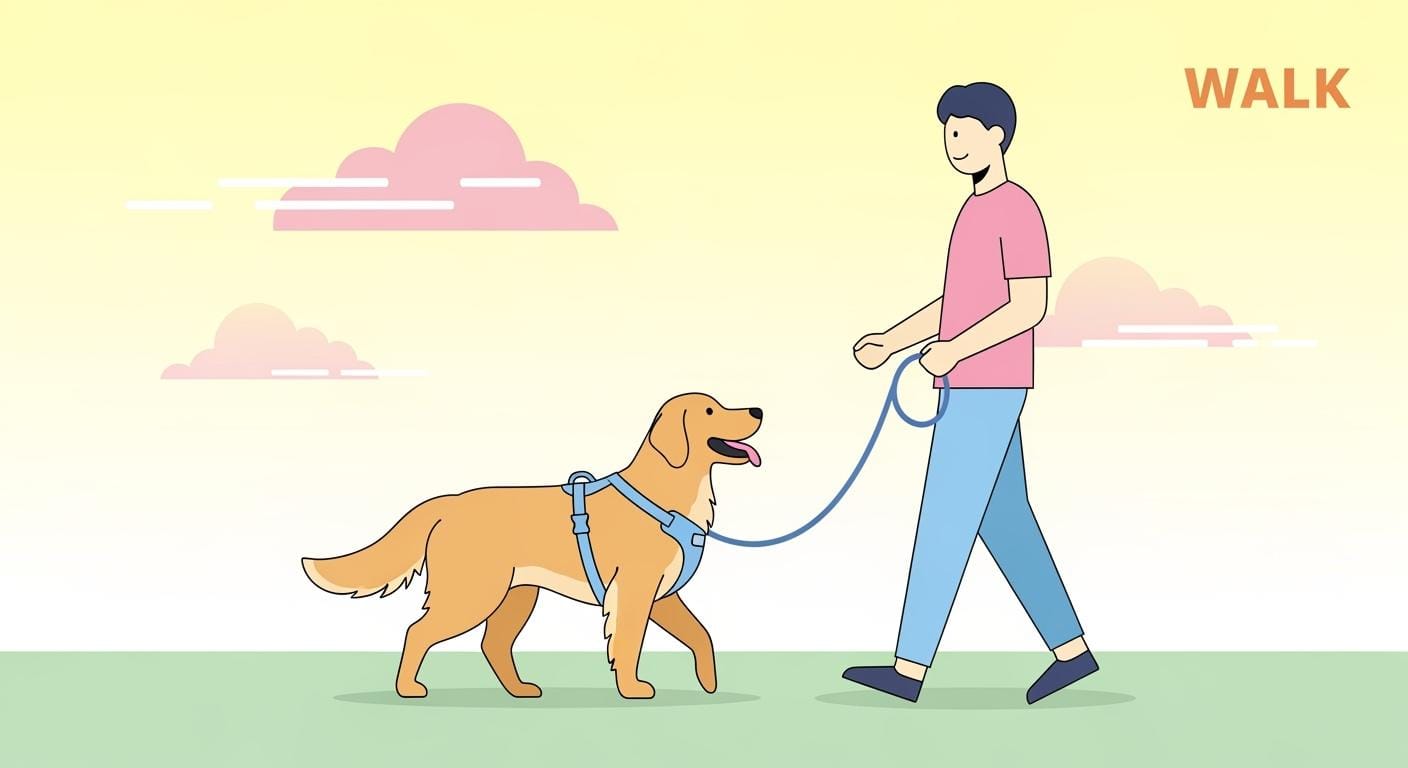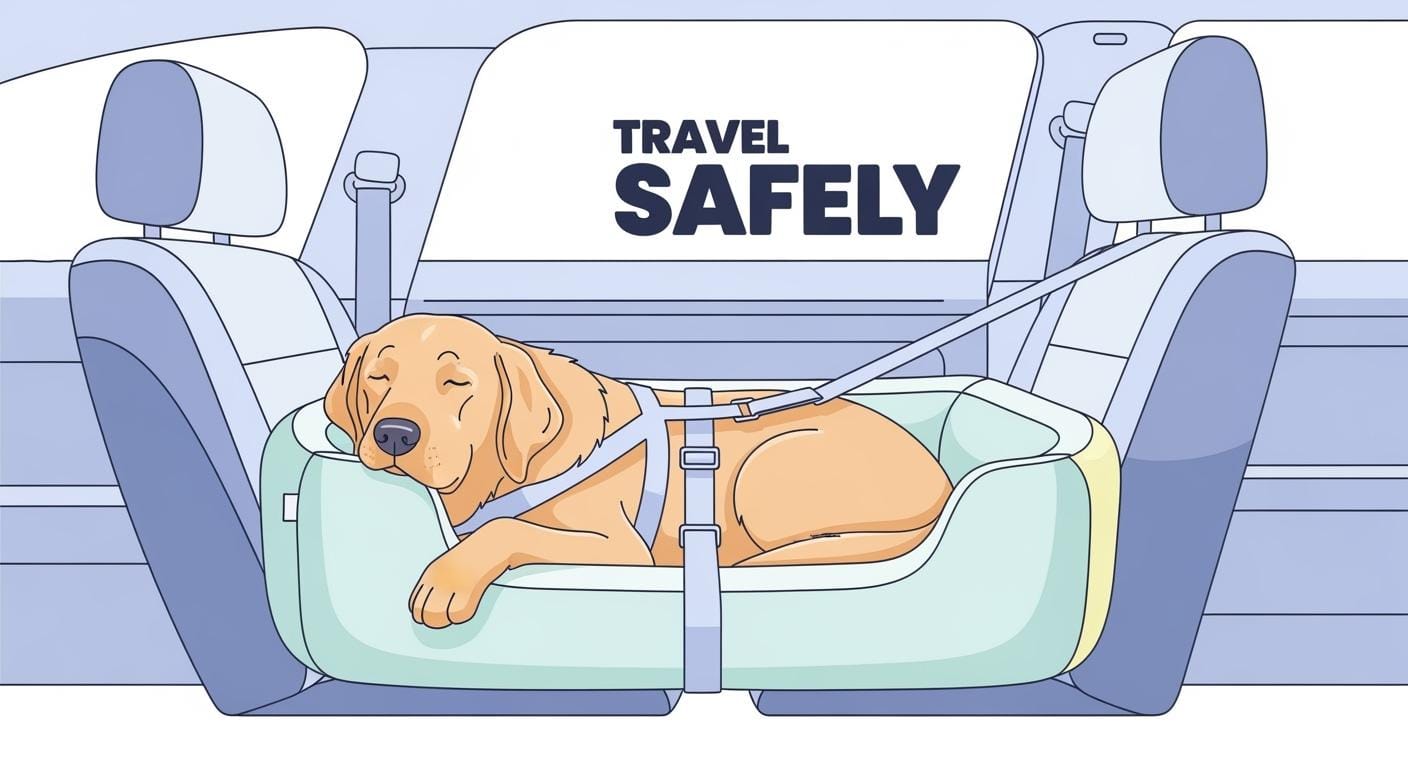
A car tether for dogs can help reduce roaming, distraction, and sudden movement in the car, but only when it is installed correctly and connected to the right equipment. Most problems come from simple mistakes: clipping to a collar, leaving too much slack, routing the tether poorly, or assuming the tether alone solves every travel risk. The better goal is to build a more stable setup that keeps your dog in one safe area of the vehicle without creating awkward pressure or tangles.
That is easier when you think about the tether as one part of your wider car travel gear rather than as a single item that has to do everything by itself.
What a car tether should do and what it should not do
A good tether setup should limit your dog’s movement enough to reduce distraction and help keep the dog from climbing into unsafe parts of the vehicle. It should also keep the dog from being thrown around as easily during a hard stop. What it should not do is put force onto the neck, allow your dog to cross seats, or become a long loose line that wraps around legs or seat hardware.
What good tether use usually looks like
- Your dog can sit or lie down naturally without climbing into the front area.
- The tether is short enough to control movement but not so short that your dog braces awkwardly.
- The dog stays in the rear seating area rather than roaming across the car.
- The setup feels predictable on ordinary turns and braking, not only when parked.
What a tether cannot fix on its own
- A poorly fitted harness.
- A dog that panics in the car and twists constantly.
- A seat or anchor point that lets the system slide or pull sideways.
- A travel routine that changes every trip and never lets the dog settle.
Quick rule: a tether should reduce unsafe movement, not replace good harness fit, calm loading, and a stable rear-seat setup.
How to install a car tether safely step by step
The safest installation starts before the dog gets into the car. Check the anchor point first, confirm the tether is not twisted, and make sure the dog is wearing a properly fitted harness. If the harness fit is unclear, it helps to sort that out before relying on the tether during a real drive.
Use this basic installation sequence
- Place your dog in the rear seating area where the tether will be used.
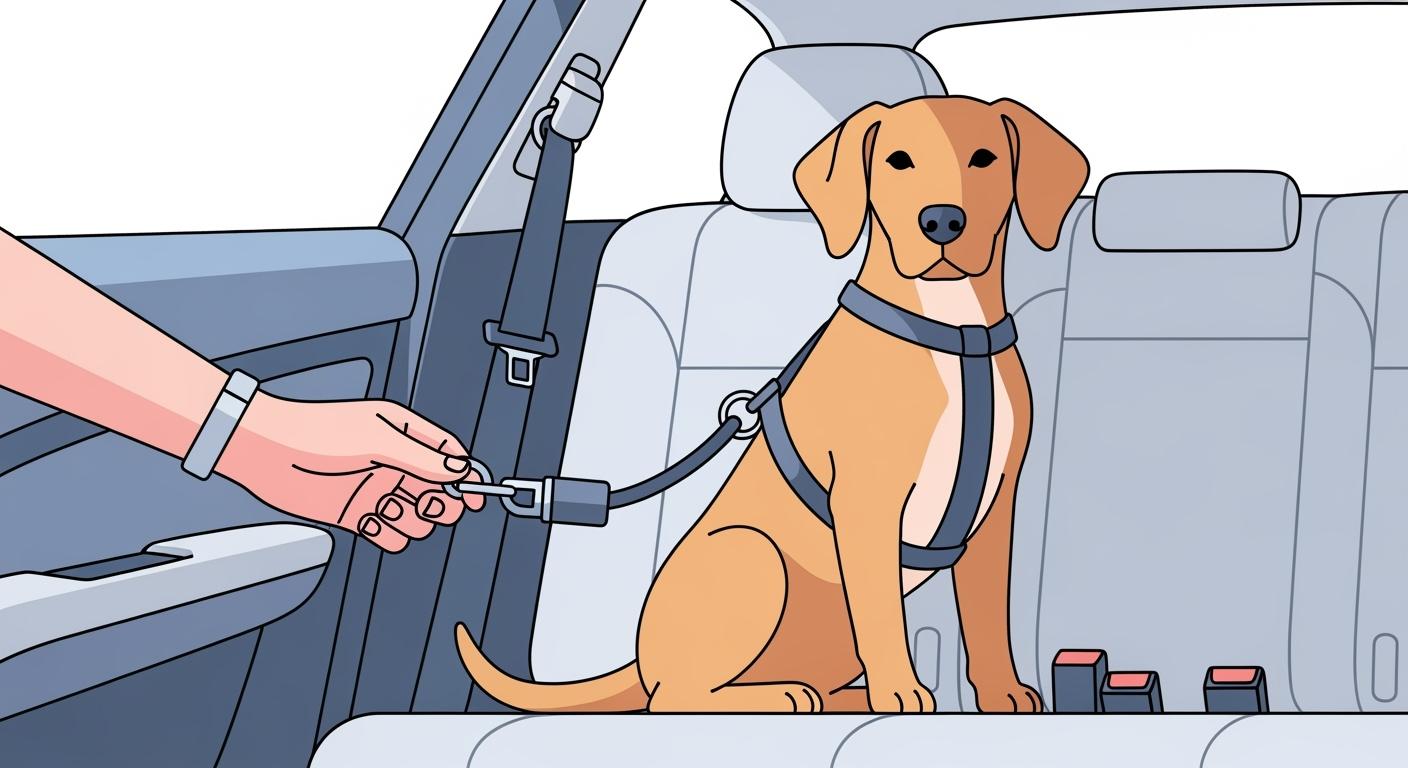
- Attach the tether to the vehicle connection point as designed for that setup.
- Make sure the tether path is clear of sharp edges, moving seat parts, and footwells where it could tangle.
- Clip the tether to a properly fitted harness, never to a collar.
- Adjust the length so your dog can sit or lie down but cannot climb across seats or jump forward.
- Do a short parked-car check and then a slow test drive before relying on the setup for normal travel.
| Kontrollpunkt | Wie das aussieht | Was muss repariert werden? |
|---|---|---|
| Anchor connection | Secure and flat with no twisting | Loose connection, angled pull, or unclear routing |
| Leinenlänge | Enough for natural sitting or lying | Too long for seat-crossing or too short for comfort |
| Harness clip point | Attached to a stable harness area | Attached to a collar or weak connection point |
| Dog position | Rear seat, controlled, and able to settle | Dog twists, climbs, or gets tangled easily |
When the harness is the weak point in the setup, the better next step is to review harness fit and sizing before assuming the tether itself is the problem.
Common installation mistakes that make the ride less safe

Most bad tether experiences come from one of a few repeat problems. The tether is left too long, the dog is clipped to a collar, the harness shifts out of place, or the dog is expected to adapt to a setup that already feels uncomfortable.
Mistakes to avoid
- Clipping the tether to a collar instead of a harness.
- Using so much slack that your dog can cross the seat or reach the front area.
- Routing the tether where it can wrap around legs, seat hardware, or armrests.
- Ignoring twisting or shifting because the dog “seems fine” while parked.
- Using the tether with a harness that loosens or rotates under pressure.
Warning signs the setup is not right yet
- Your dog braces, spins, or keeps pulling against the line.
- The tether tangles after only a few minutes of driving.
- The harness rides into the throat or shifts sideways.
- Your dog still tries to climb into unsafe parts of the vehicle.
Most of these problems get easier to spot when the tether is used as part of a calm, repeatable travel routine instead of something you clip on differently every trip.
When a car tether is not enough on its own
A tether works well for many dogs, but it is not always the best answer for every dog or every trip. Some dogs do better with more structure, especially if they overreact to movement, keep tangling, or cannot settle in an open rear-seat setup.
Consider a different setup when
- Your dog keeps spinning or wrapping into the tether.
- Your dog climbs, braces, or vocalizes through the whole drive.
- You need more enclosure than a tethered rear-seat setup can provide.
- The dog’s size or movement makes the tether feel unstable or awkward.
What to recheck before changing everything
- Recheck harness fit and strap hold.
- Shorten or slightly refine tether length.
- Confirm the dog is positioned in the rear seat with fewer distractions.
- Test the setup on a short route before deciding it has failed.
If the same issues keep happening, the answer may be a more enclosed car travel option rather than trying to make one tether setup solve every kind of trip.
Häufig gestellte Fragen
Should a dog car tether clip to a collar?
No. A car tether should clip to a properly fitted harness, not to a collar, so sudden force is not concentrated on the neck.
How long should a dog car tether be?
It should be long enough for your dog to sit or lie down naturally, but short enough to prevent climbing across seats, jumping forward, or tangling around the car interior.
Why does my dog keep tangling in the tether?
This usually happens when the tether is too long, routed poorly, or paired with a dog that twists and moves more than the setup can handle comfortably.
Can a car tether stop all travel injuries?
No. A tether can help reduce unsafe movement, but it is only one part of a safer setup that also depends on harness fit, anchor stability, and calm travel habits.
When should I stop using the current tether setup?
Reassess if your dog keeps tangling, the harness shifts badly, the dog cannot settle, or the tether setup still allows unsafe movement after basic adjustments.