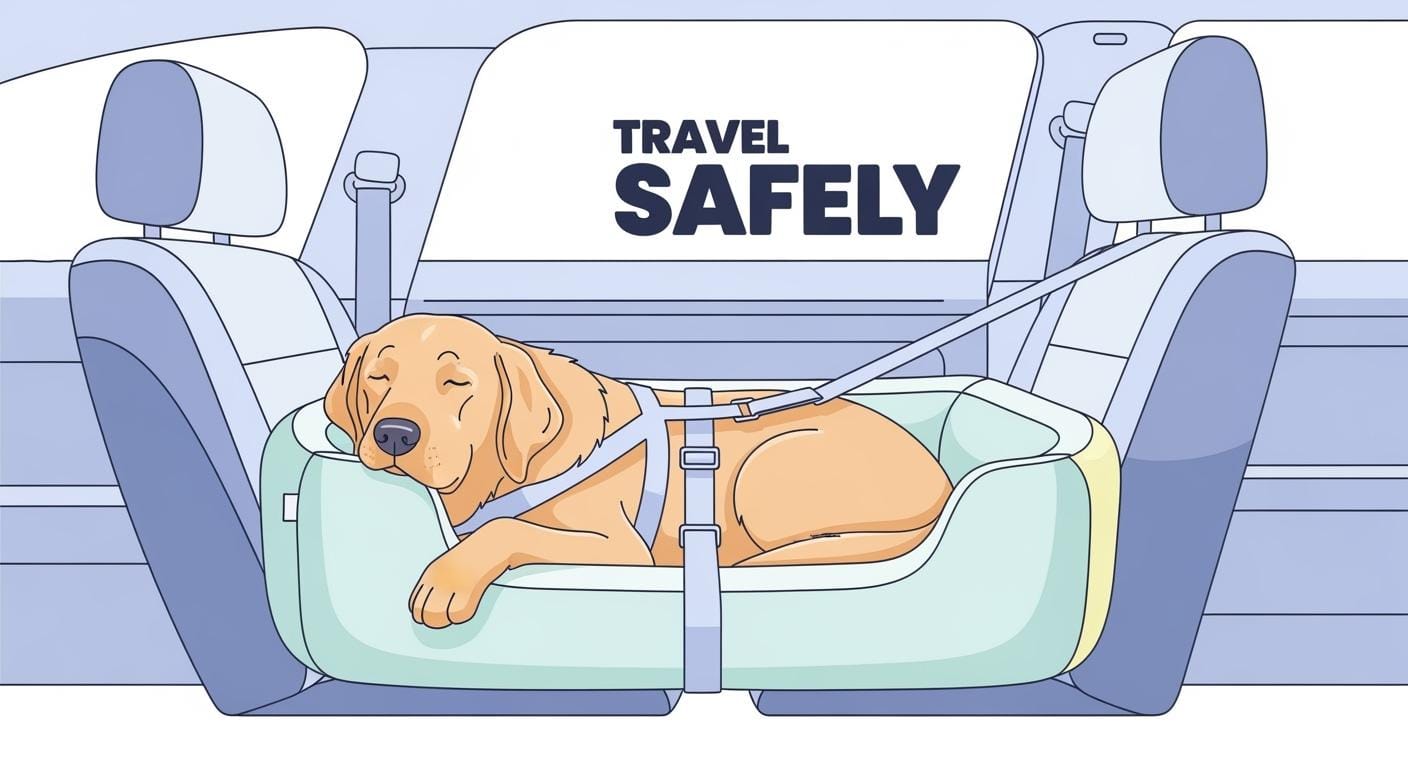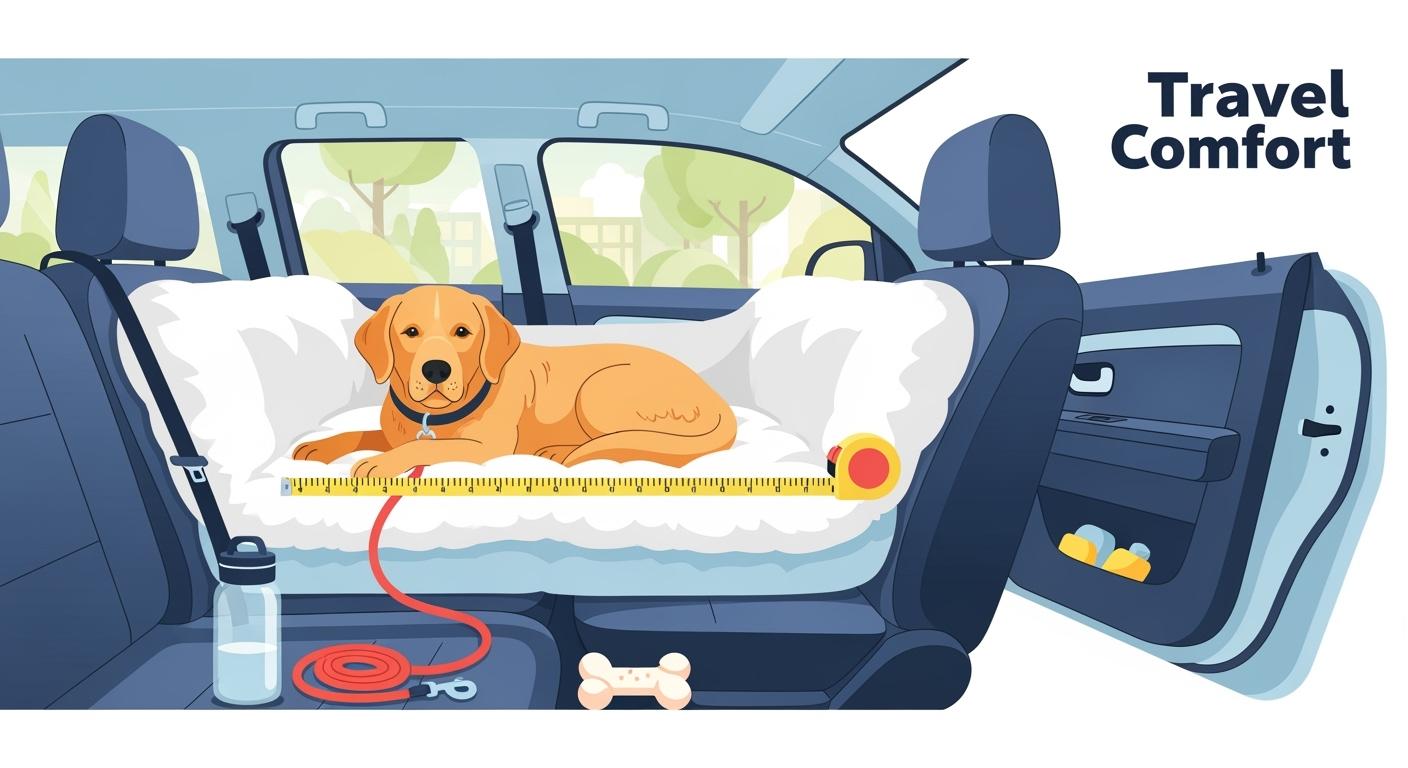
A car dog bed back seat setup works when it fits your dog, your rear seat, and your daily need for comfort, cleanup, and a separate restraint plan.
On real drives, the question is usually not whether the bed looks soft in the product photo. The better choice is the one that lets your dog settle, keeps the surface cleaner, and still works when you switch between pet rides, groceries, and human passengers.
Note: A back seat bed can support comfort and positioning, but it is not the same thing as a restraint system.
Das Wichtigste in Kürze
- Match the footprint to both your dog and the rear seat, because overhang and loose edges usually create more sliding than extra softness fixes.
- Choose based on routine, not appearance, because the better setup is usually the one you will keep using on short trips as well as longer rides.
- Keep comfort and restraint separate in your thinking. The restraint side of the trip still needs a separate dog car safety setup that stays clear once the bed is in place.
When a Back Seat Bed Makes Sense
A back seat bed usually makes sense when your dog already rides in the rear seat, settles better on a familiar surface, or does noticeably better with more predictable pressure across the body. It also helps when you want one place that catches hair, damp paws, and light dirt without turning every drive into a full rear-seat cleanup.
What matters most is not whether the bed feels plush by hand. It is whether the base stays flat, the dog can step in and turn without slipping, and the whole setup still feels practical when the car has to go back to normal use.
| Setup | Usually best for | Why it helps | Main limitation |
|---|---|---|---|
| Foldable bed | Mixed use cars, errands, shared family vehicles | Easier carry out, faster cleanup, simpler storage | May lose shape sooner with constant folding |
| Structured padded bed | Dogs that settle well on longer routine drives | Often gives steadier pressure distribution and more defined rest space | Takes up more seat width and usually slows passenger switch over |
| Seat cover plus travel mat | Short rides, muddy paws, heavy shedding | Usually easiest for cleanup and flexible bench use | Less contour support for dogs that want a nest like boundary |
| Booster style seat | Smaller dogs that want elevation and a tighter footprint | Can suit dogs that prefer a smaller containment zone | Not the right fit for medium or large dogs that need stretch room |
If you are deciding between a bed and a raised seat, the difference usually becomes clearer once you compare how dog car booster seats handle footprint, height, and containment compared with a flatter back-seat bed. And when the main issue is tipping, slipping, or edge overhang, the same fit questions show up in a dog bed for car setup too.
Tip: The easiest test of daily practicality is whether you would still bother using the setup for a ten minute errand.
Why some setups get used and others get ignored
The biggest buying mistakes usually come from treating softness as the main decision factor. In most cars, poor fit, poor traction, and awkward removal create more frustration than limited padding does.
- Choosing by plush appearance alone, then discovering the bed bridges over the seat contour and rocks in turns.
- Buying the largest option for comfort, then skipping it on ordinary trips because storage becomes annoying.
- Ignoring the restraint path, then finding straps, buckles, or tether routing no longer sit cleanly.
- Checking length but not entry behavior, even though some dogs care more about traction and sidewall height than total cushion depth.
Tip: The most common mistake is buying too much bed for the available seat, because a bulky setup often becomes unused long before it actually wears out.
What Daily Use Tells You Fast
Most weak setups seem acceptable in the driveway and then fail once ordinary life gets involved. That is why short trips, repeated removals, and messy everyday use usually tell you more than one calm parked-car fitting.
Try the setup the way you actually use your car
- Parked car fit test. Install the bed, let your dog enter, turn, and lie down, then watch for slipping, bunching, blocked buckles, or sidewall collapse.
- Three-day short trip test. Use the setup for normal errands across three days, and watch settling time, traction during entry, cleanup time, and whether you start skipping the bed when you are in a hurry.
- Real session test. Use it on the longest drive your dog usually takes, then check whether the shape holds, whether the cover still feels manageable after cleanup, and whether the setup still works after removal and reinstall.
For many cars, the same comparison ends up widening from a bed to the rest of the pet car travel setup, because covers, mats, and flatter bench styles may fit daily use better than a deeper bed. And if the question is really whether the bed stays centered and comfortable once the drive starts, those same issues show up in a car bed for dog layout too.
What usually separates a usable setup from an annoying one
| Checkpoint | Pass signal | Fail signal | Why it matters | What to Watch |
|---|---|---|---|---|
| Footprint fit | Base sits flat within the usable seat area | Front edge hangs or side walls press into the door | Stable footprint usually improves both comfort and cleanup | Soft overhang can feel fine at rest and unstable in motion |
| Entry traction | Dog steps in and turns without scrambling | Paws slip, body braces, repeated resets | Traction often matters more than extra loft | Very smooth liners can reduce confidence |
| Removal effort | One person can remove and reset it without extra fuss | You delay removal because it feels awkward or heavy | Low friction setups usually get used more consistently | Rigid walls can catch on headrests or door openings |
| Cleanup routine | Hair, dirt, and damp marks clear with a realistic routine | Debris stays trapped in seams or thick folds | Easy cleaning supports repeat use, not just first week use | Deep seams can hold odor after wet rides |
| Restraint path | Harness or other restraint route stays clear and untwisted | Bolsters or panels block normal routing | Comfort should not make restraint setup harder | High walls can crowd smaller rear seat spaces |
| Passenger switch over | Rear seat returns to normal use quickly | You avoid using the seat for people because reset takes too long | Daily compatibility is often the real buying filter | Large beds may work well but only in dedicated pet cars |
Keep a short log before you decide
Record for three days before you decide: settling time, entry traction, edge stability, cleanup time, and removal effort.
| Field | What to record | Why it matters | Main limitation |
|---|---|---|---|
| Trip type | Errand, school run, park trip, or longer drive | Different trips expose different friction points | One long drive alone rarely predicts daily use |
| Settling latency | Fast, moderate, or slow to lie down and stay down | Shows whether the dog actually accepts the setup | Excitement on one day can temporarily distort the result |
| Entry traction | Steady, slight slip, or repeated slip | Directly reflects surface usability | Wet paws can make even good fabric look worse |
| Cleanup load | Light hair, damp marks, grit, or heavy mess | Helps you compare materials honestly | Single clean rides do not test seam retention well |
| Reset effort | Easy, manageable, or annoying to remove and reinstall | Usually predicts long term consistency | A calm dog may hide how awkward the product is |
Disclaimer: This is a guide to fit, comfort, and daily usability, not a diagnosis tool for nausea, pain, breathing trouble, or severe distress during car travel.
When the Setup Starts Creating More Work Than Comfort
A bed usually stops being the right choice when you keep noticing friction in ordinary use, not when it looks worn in photos. If you skip it on short rides, fight with storage, or keep cleaning around trapped seams, your routine is already telling you something useful.
Common symptoms and quick checks
| Symptom | Likely cause | Fast check | Improvement plan |
|---|---|---|---|
| Bed slides in turns | Loose base contact or poor seat match | Push the base side to side before driving | Try a flatter footprint or a grippier under layer |
| Dog keeps standing | Low traction or unstable pressure distribution | Watch the first minute after entry | Reduce slick liners and reassess the footprint |
| Sides bend inward | Structure too soft for repeated folding | Check sidewalls after several resets | Choose a firmer edge or a simpler mat setup |
| Dirt stays trapped | Deep folds or hard to remove cover design | Inspect seams after a normal errand run | Move to a simpler surface if cleanup keeps dragging |
| You stop using it on quick trips | Removal and reinstall cost is too high | Ask whether you use it when time is tight | Switch to a lighter bed or a cover plus mat layout |
Who usually gets less value from a bulky bed
Bulky beds are often a poor fit for compact sedans, rideshare use, households that carry passengers often, and owners who need frequent grocery space. They also tend to be the wrong answer when your dog already settles well on a flatter surface and mainly needs traction and a cleaner boundary, not a deep nest.
For many mixed-use cars, the real comparison ends up shifting away from a bed and toward a simpler surface. When mess control matters more than nest-like comfort, the same problems often show up more clearly in a dog seat car cover setup.
When a simpler setup usually works better
For most mixed-use cars, the better choice is usually the one you can remove quickly and reinstall without reluctance. If daily cleanup is the bigger problem than pressure distribution, a flatter protection setup often matches the need more closely than a deep padded bed.
Häufig gestellte Fragen
How do you choose the right size?
Measure your usable rear seat first, then choose a footprint that lets your dog lie down comfortably without the base hanging over the seat edge.
Can a back seat bed improve safety?
It can improve comfort and reduce sliding in normal driving, but safety still depends on a separate restraint plan that stays clear and correctly fitted.
How often should you clean it?
Most owners do best with light cleanup after messy rides and a deeper wash only when hair, odor, or damp seams stop returning to a usable condition.
Disclaimer: This is a guide on choosing a car bed for daily rear seat use, not a promise of crash protection or a substitute for veterinary or behavior care.