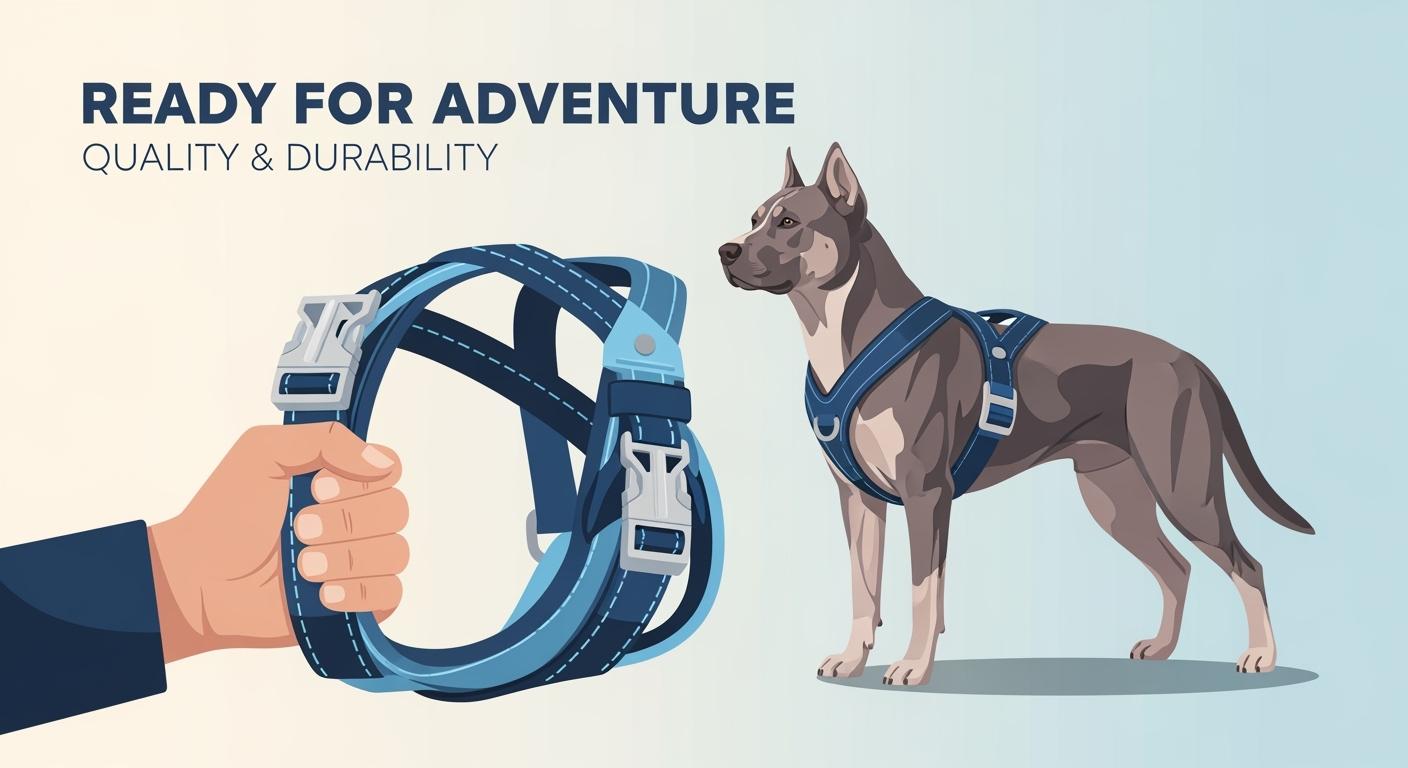
A canine pulling harness needs to stay reliable where strong force actually shows up: at the hardware, the stitching, the strap junctions, and the places where the harness twists or rubs every day. Many durability problems do not start with a dramatic break. They start with a slipping adjuster, fuzzy webbing, a chest panel that no longer sits flat, or hardware that begins to deform under repeated pulling. A better choice usually comes from checking those weak spots early instead of assuming thicker fabric alone means safer walks.
This is also why it helps to compare the harness inside a broader range of dog training harness options rather than judging durability by looks alone.
Why pulling harnesses wear out faster on strong dogs
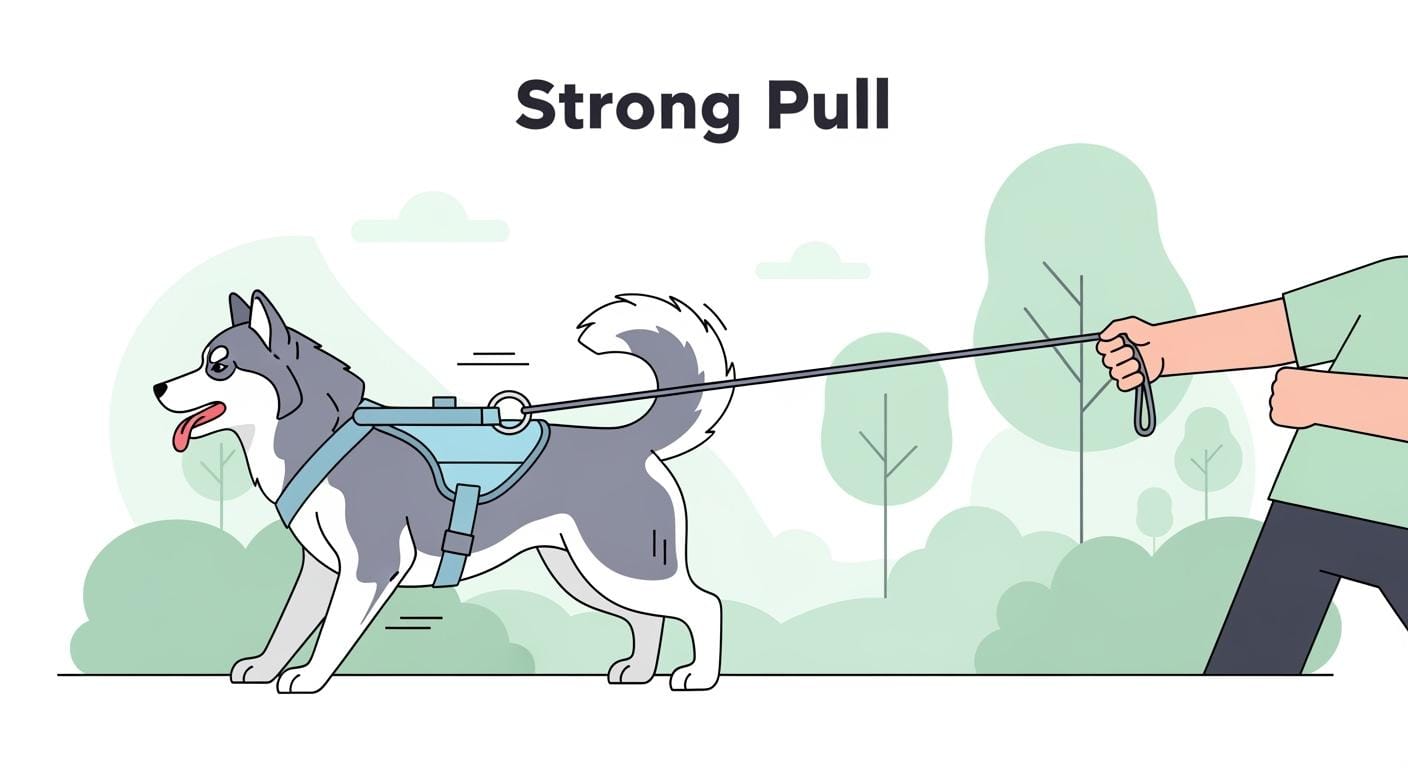
Strong pullers put force through the harness in short repeated bursts. That changes how wear develops. Instead of even aging across the whole harness, the stress concentrates at the leash attachment point, where straps join, where adjusters hold tension, and where the body twists during turns. A harness that looks fine when laid flat can still be wearing out in the exact places that matter most once the dog leans forward.
What usually creates early durability problems
- Repeated lunging that snaps the load into the same hardware and stitch lines.
- Poor fit that makes the harness rotate and grind at one side more than the other.
- Wet weather, dirt, and rough ground that speed up webbing and thread wear.
- Loose adjustment points that drift under tension and change how force is spread.
Durability is not separate from control
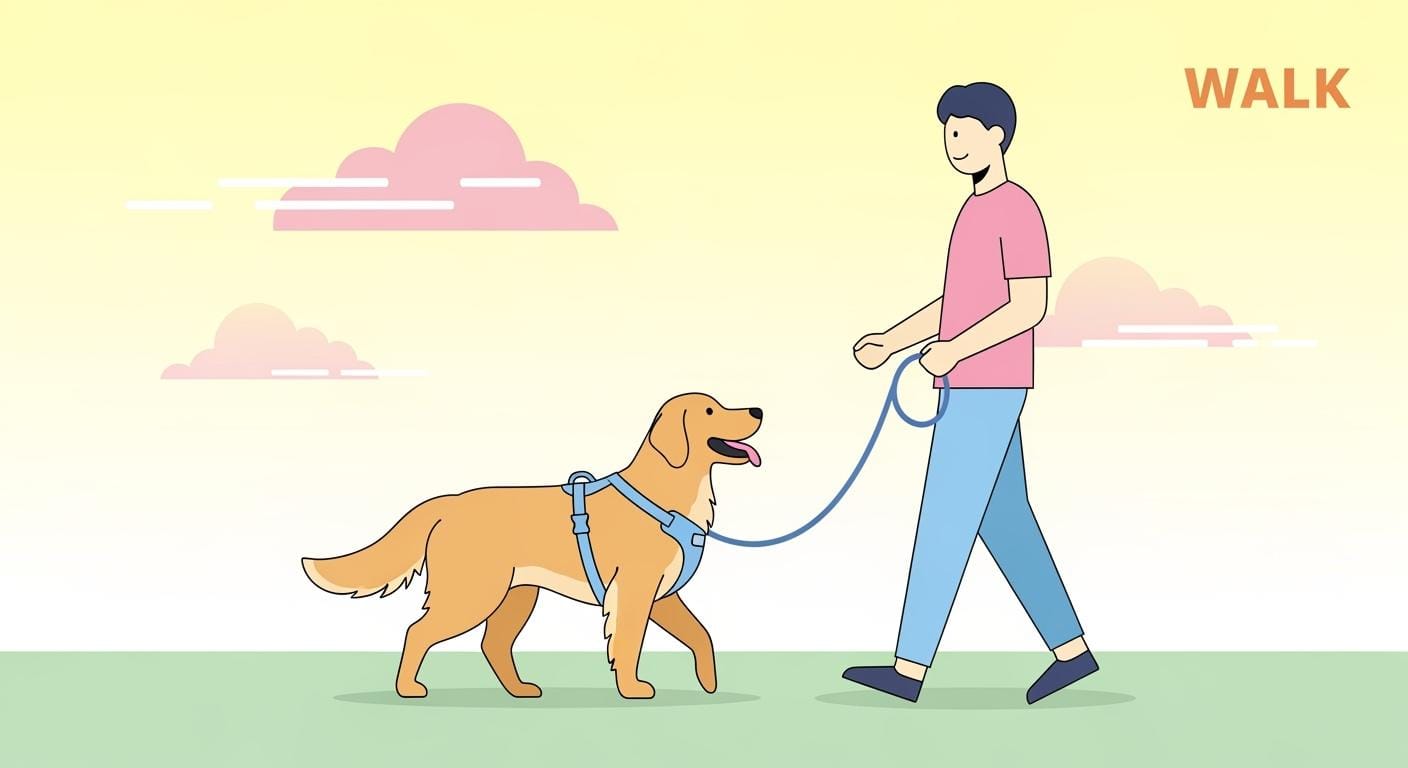
A harness that stays centered and spreads force more evenly usually lasts better because it is not fighting the dog’s movement on every step. That is one reason durability checks make more sense as part of a steadier walking setup, not as a one-time buying decision.
Quick rule: if the harness keeps twisting, riding up, or loosening on strong walks, the wear problem is often already underway even before you see obvious damage.
The weak spots you should inspect before every walk
For strong-pulling dogs, a quick hands-on check catches most problems early. You do not need to inspect every inch in the same detail each time, but you do need to know where failure is most likely to start.
| Area to inspect | Wie das aussieht | Red flags |
|---|---|---|
| Leash attachment point | Ring sits flat and feels solid | Bending, wobble, cracks, sharp edges, or pull to one side |
| Strap junctions | Stitching is tight and even | Loose threads, seam gaps, bunching, or peeling layers |
| Adjusters | Hold size under tension | Slipping, cracking, stiffness, or sharp edges |
| Webbing and edges | Dense surface with no deep cuts | Fraying, thinning, exposed fibers, or rough abrasion zones |
Start with the hardware
The clip area and leash ring take the most direct force. Check for bending, corrosion, rough edges, or any part that no longer sits aligned. Even minor hardware distortion can change how the harness loads, which then accelerates stitch and strap wear around it.
Then inspect seams and strap junctions
Look closely where straps meet the chest panel or other load-bearing sections. Broken stitches, widening gaps, fuzzy thread, or layered material pulling apart are not cosmetic details. On strong pullers, they are early failure signals.
Do not ignore abrasion zones
Areas near the chest, armpits, and strap edges can wear from constant movement even when the harness never looks badly damaged from a distance. If those contact points start feeling rough, thin, or uneven, the harness may still be functional for the moment but is already moving toward replacement.
How fit affects wear, comfort, and long-term reliability
Many durability complaints are really fit problems. A harness that fits poorly twists more, rubs more, and concentrates force in the wrong places. That means even strong materials can wear faster than expected if the shape does not match the dog well.
Signs the harness fit is making durability worse
- The chest panel shifts sideways when the leash tightens.
- The harness rides up or presses into the armpits during normal walking.
- Adjusters drift after only a few outings.
- Your dog’s gait looks shortened or less natural than before.
Use movement checks, not just standing checks
- Fit the harness snugly without pinching.
- Walk your dog in a straight line, then make a few turns.
- Watch whether the chest stays centered and the straps lie flat.
- Recheck tension after the first few minutes of real pulling.
If it is hard to tell whether the main problem is durability or the way the harness sits on the dog, it helps to compare those signs against a fuller guide to training harness fit and sizing before assuming you only need thicker materials.
When to repair, when to replace, and how to make inspections routine
Not every small flaw means the harness must be discarded immediately, but not every flaw is worth trying to fix either. The important question is whether the issue affects load-bearing safety or only surface appearance.
Usually still manageable
- Light surface fuzz on low-stress webbing areas.
- Minor dirt buildup that makes adjusters feel stiff until cleaned.
- Small cosmetic wear that does not affect fit or structural hold.
Replace instead of pushing your luck
- Cracked or bent hardware.
- Broken stitching at load points.
- Webbing cuts, deep frays, or exposed fibers in tension areas.
- Repeated fit drift that cannot be corrected with normal adjustment.
A simple 60-second check routine
- Run your hand over the leash ring, buckles, and adjusters.
- Look at the main stitch points and chest panel edges.
- Pull gently on the webbing to see whether anything shifts unexpectedly.
- Put the harness on and watch one short movement check before leaving.
The best durable harness is not the one that only survives on paper. It is the one that still fits properly, still spreads force well, and still feels predictable after repeated real walks with a strong dog.
Häufig gestellte Fragen
What are the most common weak spots in a canine pulling harness?
The most common weak spots are the leash attachment point, strap junctions, stitching at load areas, adjusters, and webbing where repeated rubbing or tension builds up.
How often should I inspect the harness?
For strong pullers, a quick check before every walk is the safest habit. After mud, rain, hard lunging, or rough outdoor use, it is smart to check again.
Can I keep using a harness with a little fraying?
Light surface fuzz in non-load areas is not the same as deep fraying at tension points. If the wear is near the ring, key seams, or main straps, replacement is usually the safer choice.
Why does my harness wear out so fast even though it looks strong?
Fast wear often comes from poor fit, repeated twisting, dirty or wet conditions, or adjusters and seams taking concentrated force every day. Material thickness alone does not prevent those problems.
How do I know whether the issue is fit or durability?
If the harness shifts, rides up, or keeps loosening, fit is usually part of the problem. If hardware bends, stitches open, or webbing breaks down at stress points, durability has already become the main issue.