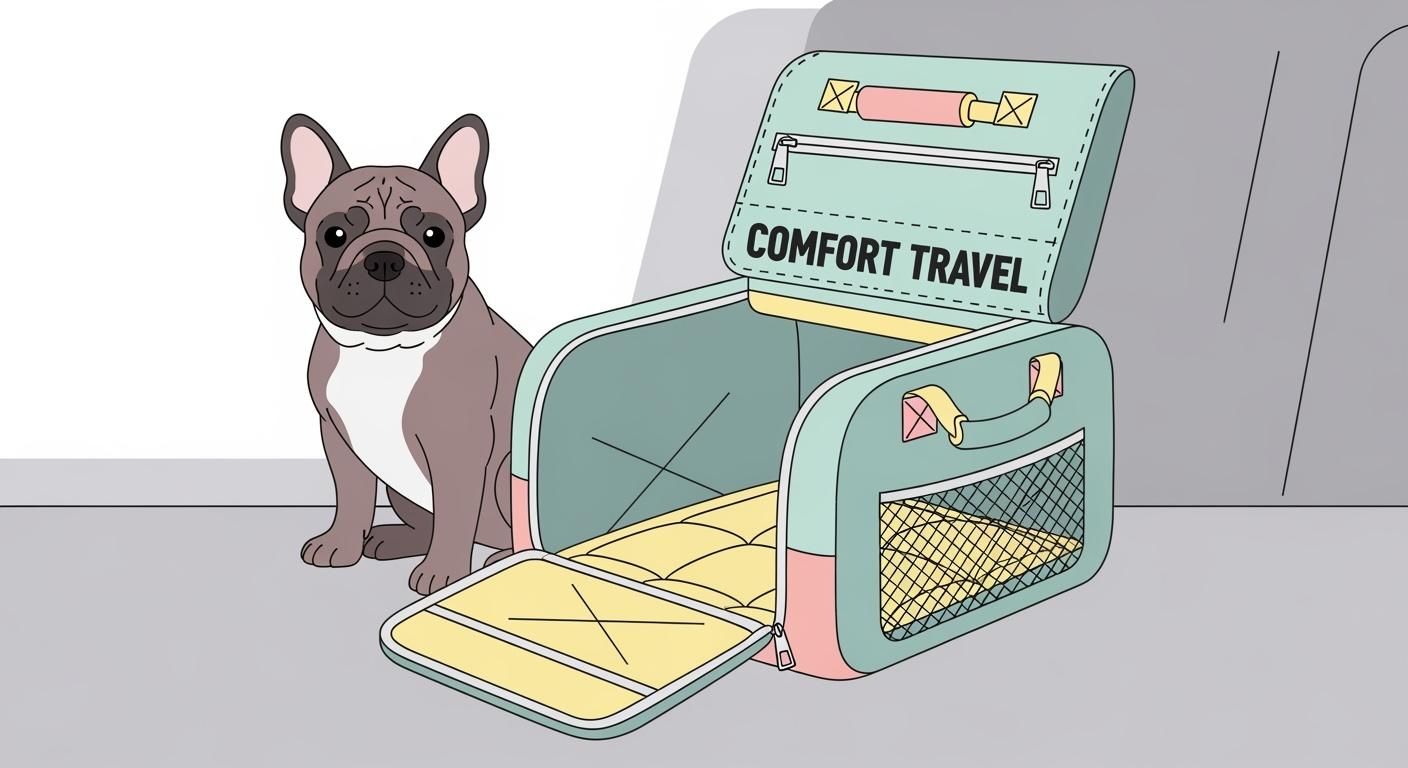
Dog carrier bags usually fail in daily use for simple reasons: the outside fabric scuffs too fast, the mesh snags, the base bends, the zipper catches, or the inside starts holding odor after wet paws and short trips. These problems are not only about how the bag looks. They come from material choice, panel support, seam reinforcement, and how easy the interior is to clean.
When comparing dog carrier bag styles, start with the product type and daily use case. A pet handheld carrier for errands or short trips does not need the same structure as an airline carrier, but both need stable ventilation, a floor that does not collapse, and surfaces that can handle repeated contact with paws, hair, moisture, and movement.
A good carrier should keep the dog fully enclosed, allow steady airflow, hold its shape when lifted, and stay clean enough for repeated use. Stop using a carrier if the bag collapses onto the dog, ventilation is blocked, the dog shows breathing trouble or distress, the interior creates rubbing, or the closures no longer stay secure.
Why dog carrier bags fail in real use
Most carrier problems start in the same high-stress areas. Openings and corners rub against floors, doors, and the dog’s nails. Handle anchors and shoulder strap points carry the most load. The base collects moisture from wet paws, accidents, and condensation. Mesh panels are exposed to clawing, pushing, and repeated flexing.
These failure points matter because a carrier is used while moving. If the base sags, the dog slides. If the mesh stretches, the carrier loses structure and may feel less secure. If the lining absorbs spills, odor becomes harder to remove. If zipper ends are not reinforced, the closure may begin to catch or separate after repeated use.
- High-friction edges: openings, corners, and the underside need abrasion resistance.
- High-stress seams: handles, strap anchors, zipper ends, and entry points need reinforcement.
- High-moisture zones: base panels and inner floors need wipeable or removable surfaces.
- High-motion contact points: the floor, side panels, and mesh need enough structure to prevent sagging and shift.
Outer fabrics: choose toughness without making the carrier bulky
The outer fabric decides how quickly the carrier shows wear. Thin shiny fabric may look light at first, but it can scuff, crease, or tear quickly when used around cars, floors, door frames, and outdoor surfaces. The better direction is a fabric that balances abrasion resistance, tear resistance, weight, and shape retention.
Oxford-style woven synthetics are common because they can offer everyday toughness without becoming too heavy. Ripstop weaves help prevent small tears from spreading, which is useful when dogs paw at panels or rub against openings. Canvas-style fabrics can feel strong and structured, but they may hold hair more easily and dry more slowly if they get wet.
| Outer material direction | What it helps with | Possible drawback |
|---|---|---|
| Oxford or high-density weave | Daily abrasion, light rain, errands, commuting | Quality varies by density and coating |
| Ripstop weave | Small snags, claw contact, tear control | Can still fail if seams and mesh are weak |
| Canvas-style weave | Shape, texture, heavier-duty feel | May dry slower and hold hair more easily |
| Very thin lightweight fabric | Low carry weight | More likely to scuff, wrinkle, or lose structure |
Mesh, ventilation, and lining decide comfort and cleaning
Mesh is necessary for airflow, but weak mesh is one of the most common failure points in soft dog carriers. The mesh should feel firm, hold its shape, and be supported by a stable border seam. Loose netting that stretches too easily can snag on nails, distort around openings, and make the carrier look worn faster.
Interior lining matters just as much as the outer shell. A smooth wipeable lining is easier to clean after wet paws, hair, and small messes. A soft fuzzy interior may feel comfortable, but it can trap hair, dander, odor, and moisture if it cannot be removed and washed.
The best cleaning setup usually combines a wipeable inner floor with a removable base pad. The carrier is easier to keep fresh when the floor can be wiped quickly and the pad can be taken out for deeper cleaning. If liquid soaks into padding, seams, or hidden fabric layers, odor becomes much harder to remove.
- Better mesh: firm hand feel, reinforced border, stable stitching, enough airflow on more than one side.
- Better lining: smooth surface, easy wiping, low odor retention, no deep fabric traps on the floor.
- Better base pad: removable, washable, flat, and firm enough to resist folding under the dog’s weight.
Base structure matters more than extra softness
A carrier base should feel stable before it feels plush. If the base bends too much when lifted, the dog may slide toward one side or sink into the middle. That makes the carrier feel unstable and can make the dog resist getting back in.
A better base uses a firm support layer plus a removable comfort pad. The support layer keeps the floor level, while the pad improves comfort and cleaning. A carrier that only adds soft padding without enough support may feel nice by hand but still collapse during carrying.
For airline or long-trip use, base stability becomes even more important. Under-seat compression, long waiting times, and limited room can expose weak floors, poor ventilation, and interiors that are hard to clean. Use an airport checklist when flight use is the main scenario. For under-seat sizing and carrier fit, compare the product against an airline-approved carrier guide before depending on the bag for travel.
Construction details that prevent early failure
Strong materials still fail if the construction is weak. The most important areas are handle anchors, shoulder strap points, zipper ends, entry openings, mesh borders, and corner seams. These parts take repeated pulling, lifting, folding, and twisting, so they need more reinforcement than flat panels.
| Construction area | What to look for | Failure sign |
|---|---|---|
| Handle anchors | Extra stitching layers and stable fabric backing | Pulling, puckering, loose threads, or fabric stretching |
| Zipper ends | Reinforced stop points and smooth fabric clearance | Catching, separation, or gaps near the end |
| Mesh borders | Firm seam binding around mesh edges | Stretching, fraying, or tearing near corners |
| Base panel | Flat support and removable washable pad | Sagging, rocking, folding, or odor trapped inside |
| Interior seams | Smooth edges where the dog rests or turns | Rough contact points that may rub skin or coat |
Quick checks before choosing a dog carrier bag
A carrier does not need complicated claims to be reliable. It needs the right material in the right place. Before choosing a style, check whether the outer shell can handle friction, the mesh can resist snagging, the base can stay flat, and the interior can be cleaned without holding odor.
- Lift check: place weight inside and lift by the handle. Watch handle anchors, side panels, and base shape.
- Wipe check: use a damp cloth on the inner floor. If moisture soaks in quickly, odor control may be harder.
- Mesh check: press and lightly pull the mesh edge. Weak borders may stretch or fray over time.
- Base check: set the carrier down and check whether the floor stays flat instead of folding or rocking.
- Seam check: run a hand along interior edges. Rough seams can become rubbing points during longer use.
Häufig gestellte Fragen
Is waterproof fabric always better for a dog carrier bag?
Not always. Water resistance helps with cleanup, but fully sealed materials can feel warmer and may reduce comfort if ventilation is weak. A more balanced design uses a wipeable inner floor, breathable mesh, and a removable washable pad.
What material is easiest to clean?
A smooth wipeable lining with a removable washable base pad is usually the easiest combination. It prevents deep soaking and makes odor control more realistic between full washes.
What should be checked first if a carrier smells quickly?
Check the inner floor, base pad, and seams. Odor often stays when moisture soaks into padding or hidden fabric layers. A removable pad and wipeable lining make cleaning easier.
What matters most if a dog scratches or paws at the carrier?
Prioritize stronger mesh, reinforced mesh borders, abrasion-resistant outer fabric, and clean edge binding around openings. Thin netting and weak seams are more likely to fail first.