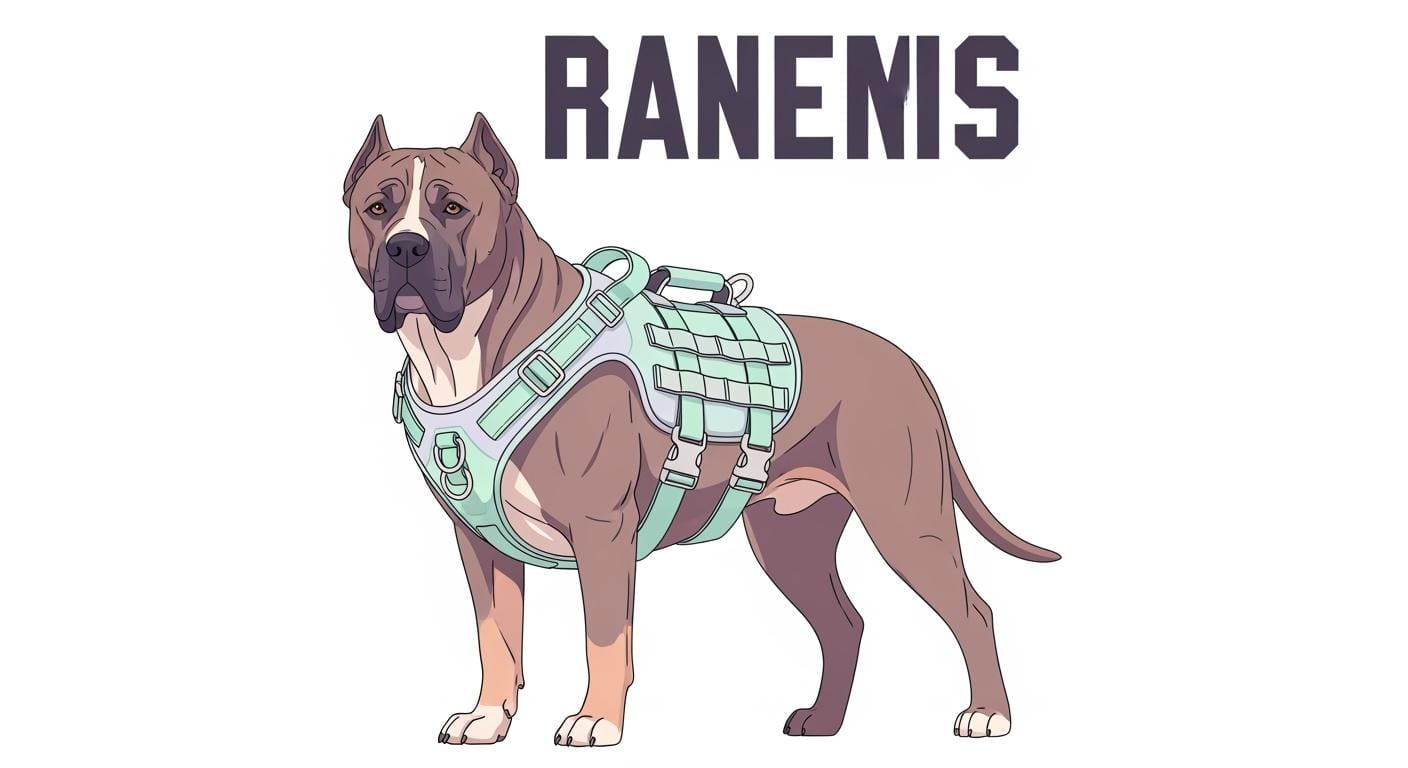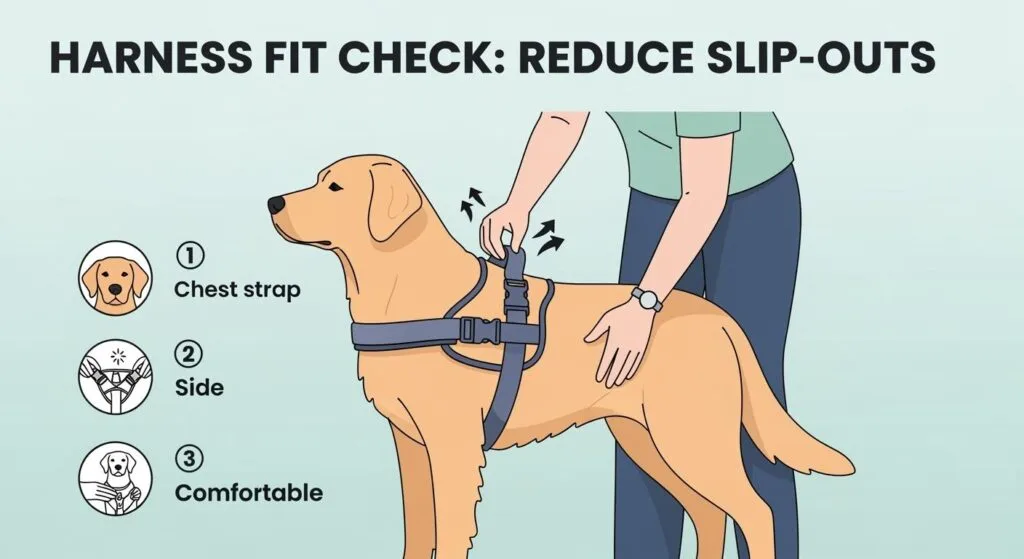
A big harness for dog use can look fine during a standing try-on and still behave differently once the dog starts moving. Large dogs put more force into turns, stops, and leash pressure, so the first short walk tells you more than a quick mirror check. The goal is not to find the biggest-looking harness. The goal is to see whether the harness stays readable, comfortable, and steady when your dog actually moves.
If you are comparing broad options first, start with the dog harness category view. It helps separate everyday walking harnesses from bulkier vest styles or handle-heavy designs before you commit to one shape.
Why the First Walk Tells You More Than Standing Still
Standing still hides many problems. A harness may sit straight before the leash is attached, but walking shows whether the chest section remains centered, whether the shoulder area stays open, and whether the hardware keeps its position. For a large dog, these small changes matter because strength and body weight make weak points show up faster.
This does not mean big dogs need the heaviest harness available. A large dog often needs a harness that stays practical under movement, not one with the most padding, the most straps, or the largest panels. The first walk should answer a simple question: does the harness still make sense after the dog moves naturally?
| Standing try-on may show | First walk shows | Why it matters |
|---|---|---|
| The harness looks centered | Whether it stays centered during turns | Large dogs can shift weak layouts quickly |
| The straps seem adjusted | Whether both sides keep the same balance | Uneven tension can change after movement |
| The chest panel sits flat | Whether it moves with the chest cleanly | Flat standing fit does not always mean walking comfort |
| The hardware looks secure | Whether clips and rings stay stable under leash pressure | Hardware movement can affect control and comfort |
If you want a broader comparison of shapes and daily-walk priorities before choosing one, this best dog harness guide is the right next step.
What to Watch During the First Short Walk
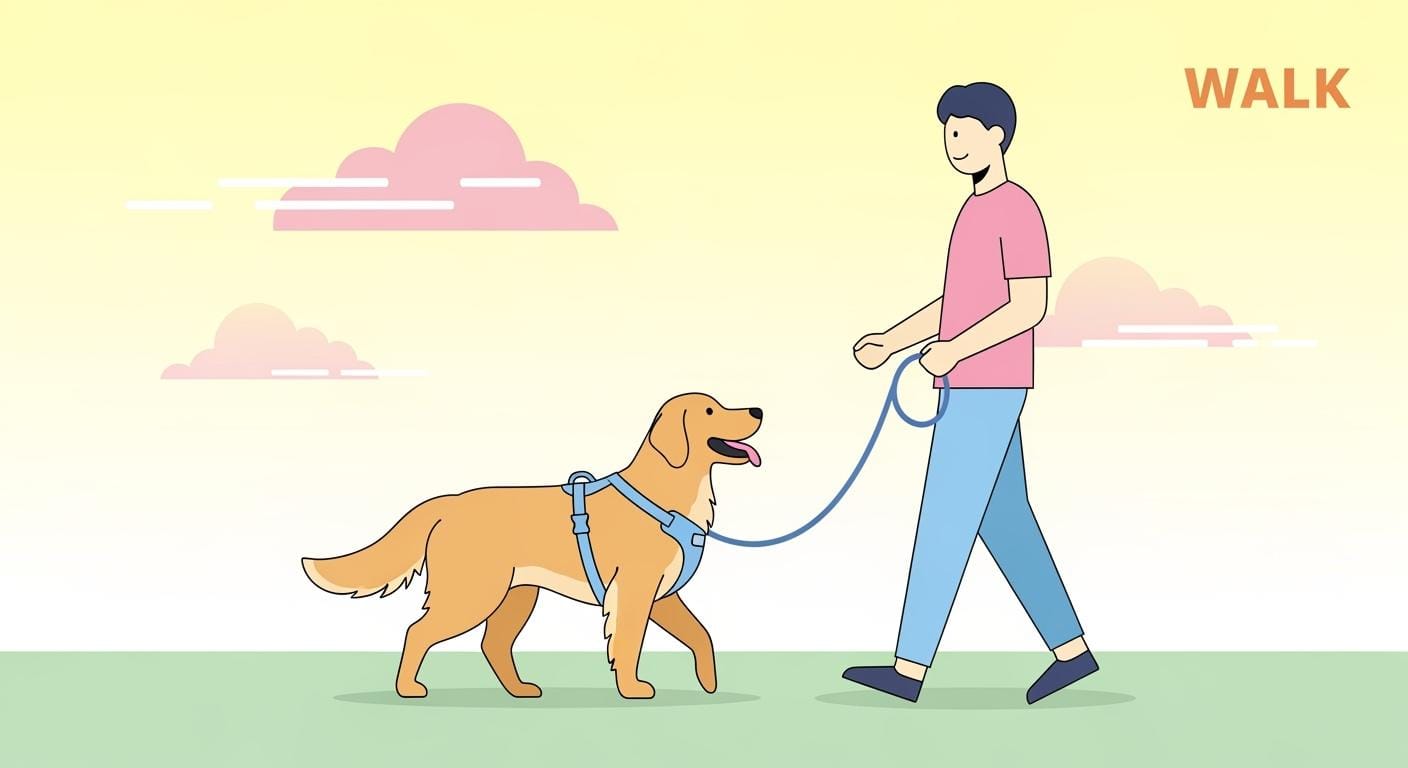
Keep the first check simple. Use a short, familiar route and watch how the harness behaves when the dog walks forward, turns, pauses, lowers the head, and changes pace. You are not trying to stress the harness. You are checking whether it stays comfortable during normal movement.
- The chest section should stay in a predictable place instead of drifting after every turn.
- The shoulder area should remain open enough for a natural stride.
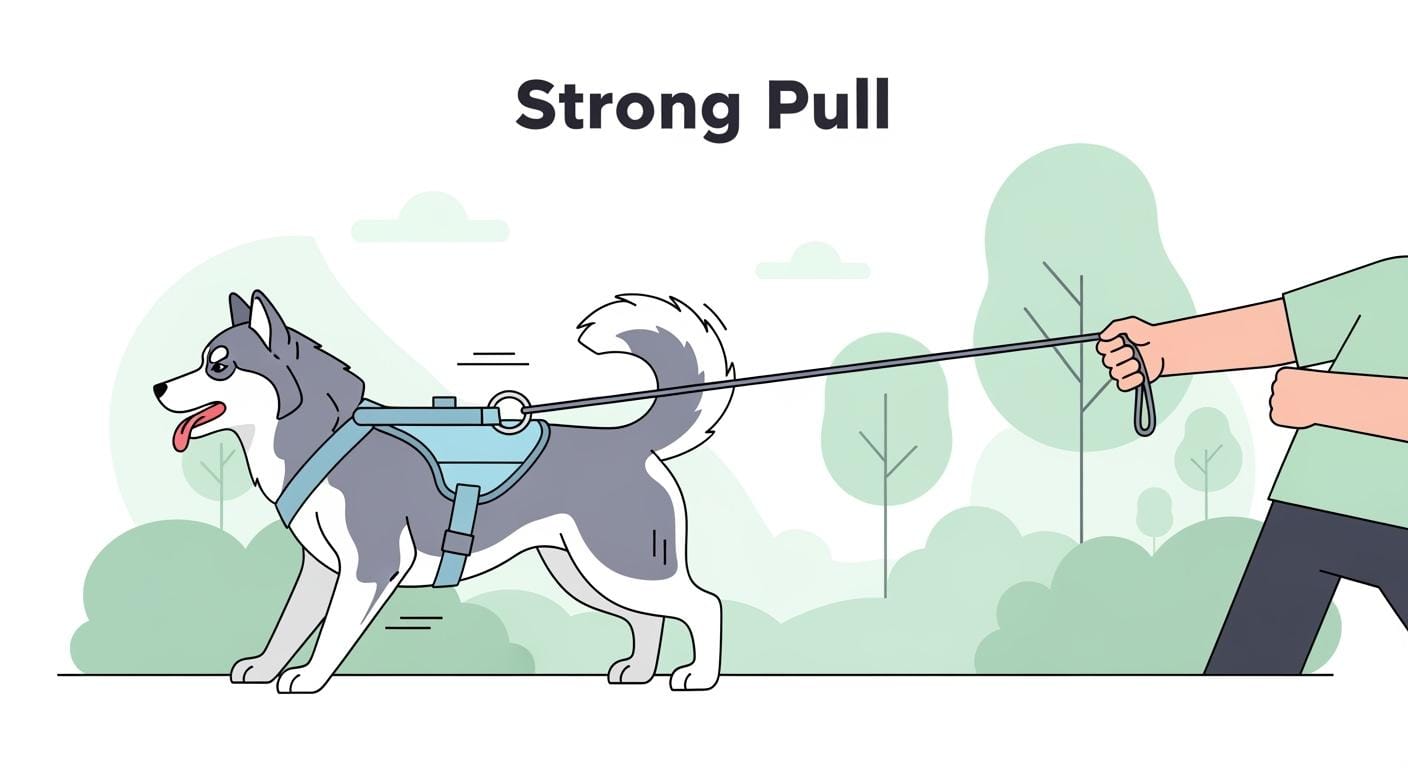
- The leash attachment should not pull the harness off balance under light pressure.
- The dog should not shorten steps, hesitate, scratch at the harness, or move stiffly.
- Edges and strap paths should not leave obvious pressure marks after brief use.
If you are also choosing leash length and clip style at the same time, this dog harness and leash set guide helps make sure the harness and leash work together instead of adding extra pulling force in the wrong place.
Where Big Harnesses Usually Fail on Walks
A big harness for dog use can fail for several reasons, but the first walk usually makes the pattern easier to see. The issue is not always the size number. It may be the shape, panel position, hardware balance, or the way the harness responds when the dog moves.
| What you see | What it may mean | What to check next |
|---|---|---|
| The front area moves upward | The front shape may not sit well under leash pressure | Check whether the chest section stays low enough during walking |
| The harness turns to one side | The layout may not match your dog’s body shape | Check strap balance and whether the body shape needs a different design |
| The dog shortens stride | The harness may crowd the shoulders or front legs | Watch movement from the side and front |
| Hardware swings or pulls | The clips or rings may be too heavy or poorly placed | Check whether hardware stays flat during normal leash pressure |
| The harness feels hot or bulky | Extra material may be more than the walk needs | Compare padding and coverage after a short route |
These checks keep the page focused on first-walk behavior instead of turning it into a full measuring guide. Use measurements before buying, but use the first walk to decide whether the chosen harness design is practical for your dog.
How to Decide Whether to Keep Testing It
Some first-walk issues are minor. A strap may need a small adjustment, or a leash clip may need a different routine. Other issues mean the harness shape is probably not right for your dog. The difference is whether a simple adjustment makes the walk clearer, or whether each fix creates another problem.
- Keep testing if a small, even adjustment improves comfort without creating new pressure points.
- Stop testing if the same movement problem returns after each short walk.
- Choose a simpler design if heavy panels or hardware make the dog move stiffly.
- Choose a different shape if shoulder room, chest position, or body coverage never feels natural.
A good big harness should make the next walk easier to judge, not more confusing. Once the right shape is on the dog, the harness should stay readable after movement and should not need constant correction to feel usable.
Häufig gestellte Fragen
Why does a big harness look fine before the walk but feel wrong later?
Standing still does not show how the harness handles turns, leash pressure, shoulder movement, or hardware balance. The first short walk reveals those issues more clearly.
Should I choose the biggest harness for a big dog?
No. A big dog needs a harness that matches body shape, movement, and walking routine. The biggest option can feel bulky or unstable if the shape is wrong.
How long should the first walk test be?
Use a short, familiar route first. The goal is to watch normal walking, turning, pausing, and leash pressure before trusting the harness for longer outings.
What should I check after the first walk?
Check whether the harness stayed centered, whether the shoulders moved freely, whether hardware stayed flat, and whether any edges left pressure marks.
When should I switch to another harness shape?
Switch when the harness keeps drifting, crowding movement, trapping heat, or needing constant correction after short normal walks.