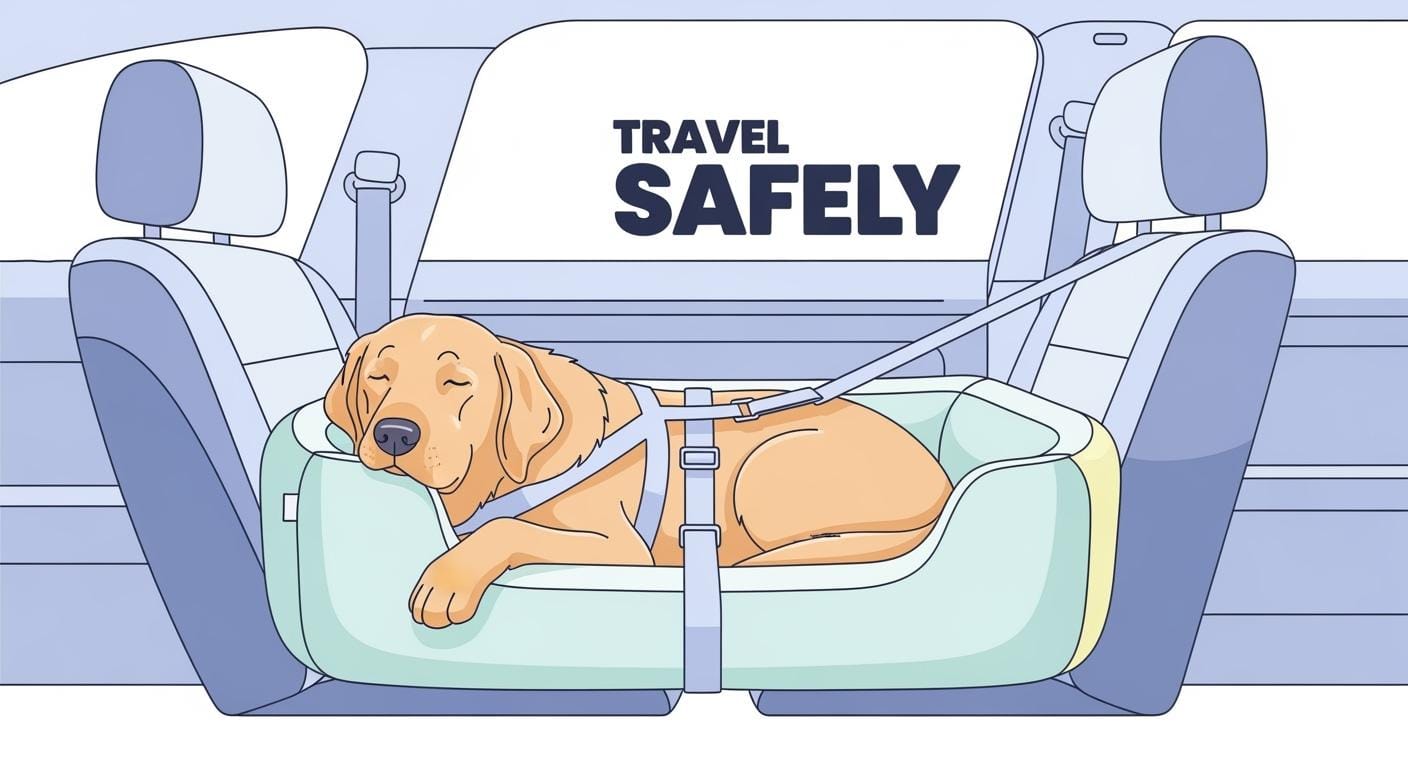
A restless dog in the back seat usually is not fighting the ride for no reason. Many dogs keep sliding, spinning, and shifting because the surface under them does not feel steady enough to trust.
A back seat dog cover works when three things come together: the cover grips the seat, the shape gives the dog a stable area to stand or lie down, and the anchors stay tight after the dog starts moving. When one of those fails, the dog often keeps readjusting for the whole trip.
Note: A seat cover can improve footing and protect the upholstery, but it is not the same thing as a restraint. A travel harness still matters when the dog needs to stay secured during the ride.
Das Wichtigste in Kürze
- A restless dog usually settles faster on a surface that does not slide or sag.
- Hammock-style covers often work better than flat bench covers for dogs that keep moving around.
- If the cover keeps drifting, bunching, or lifting at the edges after retightening, the problem is usually the cover itself, not just the installation.
Why Covers Fail Once the Dog Starts Moving
Most covers look acceptable before the car moves. The real problems show up after the dog turns around, braces on a corner, or shifts weight during the first few minutes of the drive.
Sliding is usually the first problem
If the underside does not grip the seat well, the whole cover starts drifting during turns and stops. Once that happens, many dogs keep trying to correct their footing instead of lying down and relaxing.
Bunching changes the feel under the paws
A cover that wrinkles under the dog’s paws can feel unstable even if it is not moving much overall. Dogs that circle before settling often make this problem worse, especially when the cover is oversized or the fabric is too loose.
Edge lift creates gaps and weak spots
Loose corners and lifted edges let dirt reach the upholstery, but they also make the cover feel less secure. Some dogs keep stepping onto those lifted edges, which makes the whole setup move even more.
| Failure Type | What You See | Mögliche Ursache | What to Watch |
|---|---|---|---|
| Sliding | Cover drifts toward the center or the door | Weak or worn non-slip backing | Check the underside after washing and repeated use |
| Bunching | Wrinkles build under the dog’s paws | Loose fit or extra fabric | Pull the cover flat before every ride |
| Edge lift | Corners peel up during the drive | Loose or poorly placed anchors | Tug each corner before loading the dog |
| Center sag | Middle dips when the dog stands | Loose hammock tension or weak support | Press the center before each trip |
What Usually Helps a Restless Dog Settle Faster
Dogs usually settle faster when the surface feels predictable. That means grip under the paws, enough support through the middle, and a shape that stops them from spilling forward into the footwell.
Why hammock-style covers often work better
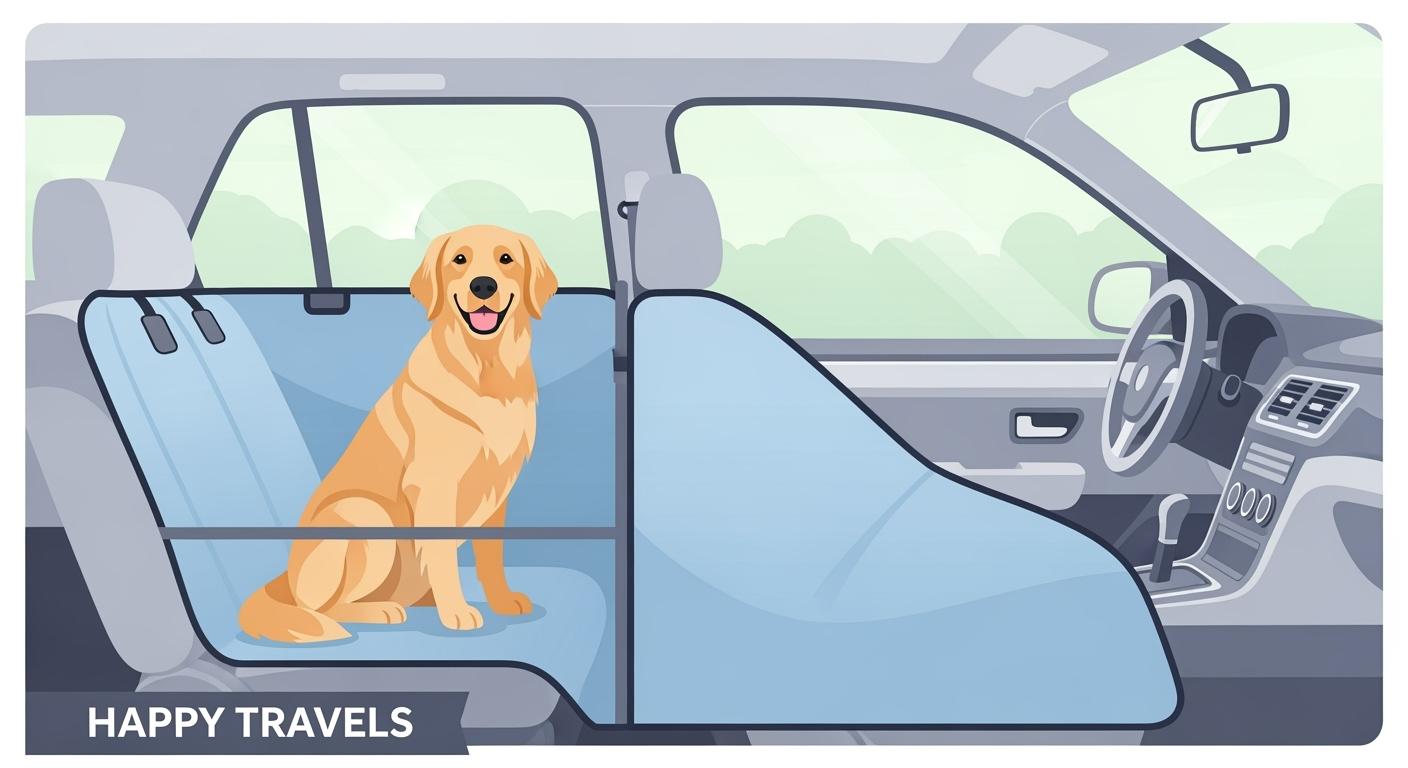
A hammock setup usually helps because it blocks the gap between the front and rear seats and creates a more contained area. For dogs that keep walking forward or losing balance near the edge, that change alone can make the ride feel calmer.
Why non-slip backing matters so much
Backing is what keeps the cover from moving against the upholstery. Without real grip underneath, even a well-shaped cover can still slide enough to keep the dog uneasy.
Why texture on top matters too
The top surface affects how well the dog can stand, turn, and lower into a resting position. Smooth fabric often feels slick under active paws, while a more textured surface usually gives better traction during normal movement.
| Cover Type | Stability for Restless Dogs | Main Advantage | What to Watch |
|---|---|---|---|
| Bench cover | Moderate | Simple layout and easier seat access | Dog can still move forward or slide off the edge |
| Hammock cover | High | Better containment and less footwell drop | Loose tension creates sag in the middle |
| Hard-bottom cover | Very high | Steadier footing for heavier or more active dogs | Bulkier and less flexible in some vehicles |
| Feature | Why It Helps | What to Watch |
|---|---|---|
| Non-slip backing | Keeps the cover from drifting during turns and stops | Grip often wears down over time |
| Multiple anchor points | Spreads movement force across more fixed points | Loose anchors reduce stability quickly |
| Adjustable straps | Helps fit different rear seat sizes more tightly | Loose straps leave slack even on a good cover |
| Hammock shape | Keeps the dog in the back seat area | Center should not sink too easily |
| Textured fabric | Gives paws better grip when the dog stands or turns | Worn smooth fabric often feels less secure |
Tip: Before every ride, press the center of the installed cover. If it drops too easily, the dog will usually feel that weakness even more once the car starts moving.
How to Check Whether the Cover Is Actually Working
A quick test is usually enough to show whether the setup is helping or just looking tidy. The goal is not perfect appearance. The goal is whether the dog can get in, move once or twice, and settle without fighting the surface.
Start with a parked movement check
Let your dog enter the car and circle once or twice while parked. Watch for wrinkles, lifting corners, or movement through the middle of the cover before the drive even begins.
Use a short drive with turns
A five to ten minute route with a few turns usually shows the real result. Sliding, repeated repositioning, or attempts to climb forward often reveal more than a long straight drive does.
Check the setup again after the ride
Look for gaps, shifted straps, loosened anchors, and any new bunching under the dog’s usual resting area. Those details usually show whether the problem is temporary or part of the setup itself.
| Artikel prüfen | Signal weiterleiten | Fehlermeldung | Beheben |
|---|---|---|---|
| Cover stays in place | No drift after turns or stops | Slides toward the center or side | Retighten anchors or replace worn backing |
| Fabric lies flat | No bunching under the dog | Wrinkles build under the paws | Pull tighter and remove excess fabric |
| Edges stay down | No lifted corners or gaps | Edge lift shows during the ride | Adjust or add anchor points |
| Dog settles within a few minutes | Dog lies down and stays put | Dog keeps shifting or turning | Check surface grip and cover style |
| Harness path stays usable | Travel restraint clips cleanly without fighting the cover | Openings are blocked or misaligned | Realign the cover before loading the dog |
Signs the Cover Needs Replacing
Some problems can be fixed with tighter straps or a better fit. Others keep coming back because the cover has already worn past the point where adjustment helps.
Sliding after every retightening
If the cover keeps drifting even after careful reinstallation, the non-slip backing may already be worn smooth. At that point, pulling the straps tighter usually does not solve the real problem.
Persistent bunching in the same area
When the same wrinkles keep forming under the dog’s paws, the cover may be the wrong size or the fabric may have lost the structure it needs to stay flat.
Fraying straps and failing waterproof layers
Worn straps, peeling layers, and trapped odor often show that the cover is simply aging out. Even if the cover still looks usable from a distance, these weak points usually get worse quickly once a restless dog keeps loading the same areas.
| Sign | What It Usually Means | Was ist zu tun? |
|---|---|---|
| Sliding after every retightening | Backing has lost grip | Replace the cover |
| Persistent bunching | Wrong size or weakened fabric structure | Switch to a better-fitted cover |
| Fraying straps | Anchor system is wearing out | Replace before the straps fail further |
| Strong odor after normal cleaning | Waterproofing and inner layers are degrading | Replace the cover |
| Dog avoids lying down on it | Surface feels unstable or uncomfortable | Try a different cover type or check for medical causes if the change is sudden |
Disclaimer: If your dog’s travel restlessness is sudden, severe, or comes with vomiting, heavy panting, shaking, or breathing difficulty, stop the ride and speak with your veterinarian instead of assuming the cover alone is the problem.
Häufig gestellte Fragen
What cover type usually works best for a restless dog?
A hammock-style cover with real grip underneath and multiple anchor points usually works best for dogs that keep shifting and repositioning.
How do you clean a back seat dog cover?
Remove loose hair first, then wipe it down or machine wash it according to the care label, and let it dry fully before reinstalling.
Do you still need a harness with a hammock cover?
Yes. A hammock improves footing and containment, but it does not replace the need for a travel restraint.
Does one hammock cover fit every vehicle?
No. Rear seat width, headrest shape, and seat layout still affect the fit, so a cover that works well in one car may sit loosely in another.
A back seat dog cover helps a restless dog settle when the surface feels steady from the first minute of the ride. If the cover keeps sliding, sagging, or bunching after normal adjustment, the dog is usually telling you the setup still does not feel secure enough.