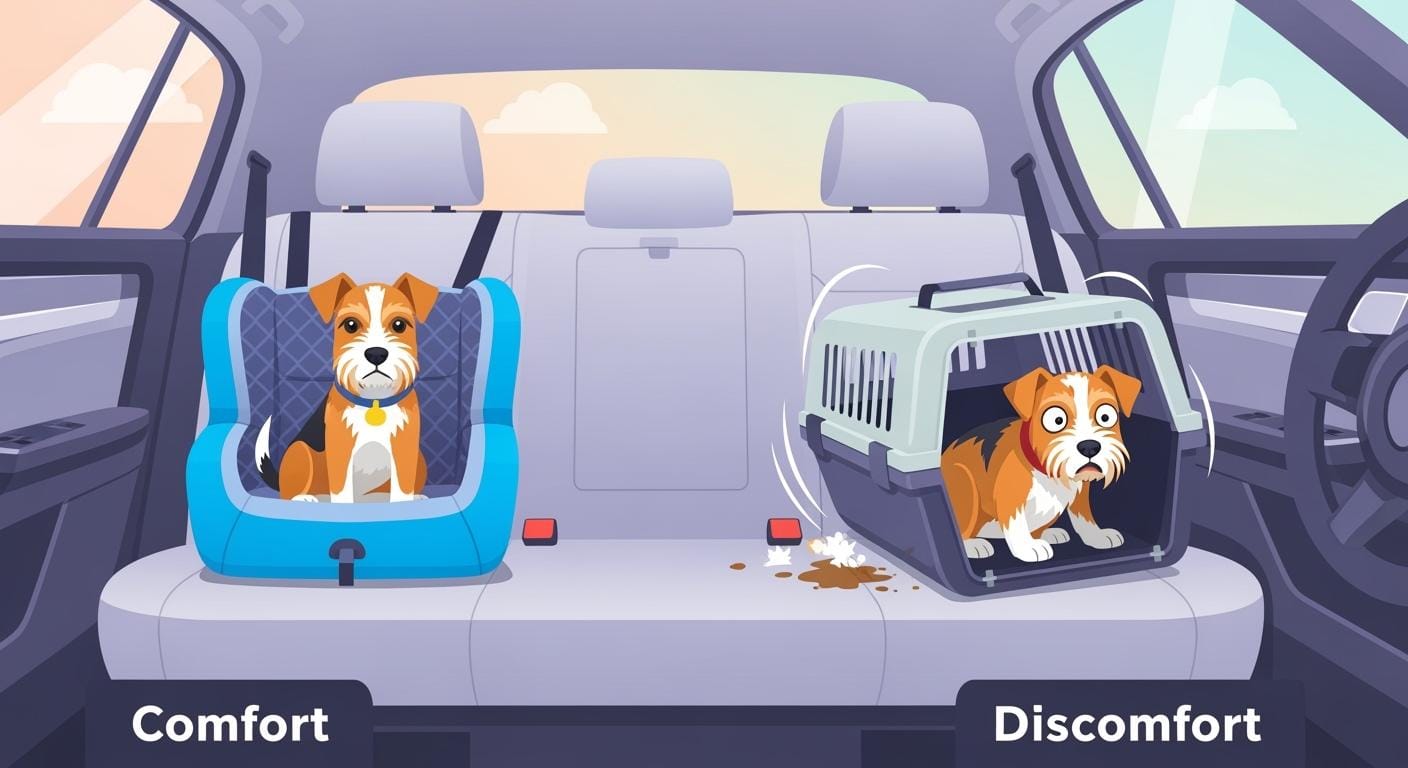
The best small dog car seat is not simply the softest or the tallest one. In real use, the seat fails when the base slides, the dog braces against the wall, the tether pulls at the wrong angle, or the cover becomes hard to clean after fur, drool, mud, or motion sickness.
A better small dog car seat keeps the dog inside the usable base area, stays flat on the rear seat, gives enough side support without crowding the body, and keeps the harness connection centered. Those details matter more than a high booster shape or a long feature list.
This article is general product-selection guidance, not medical advice. If a dog shows pain, breathing stress, vomiting, or ongoing distress during travel, contact a veterinarian.
Key takeaways
- The seat should be sized around usable base area, not only dog weight.
- Choose a car seat that fits your dog’s size and shape before focusing on window height or decorative padding.
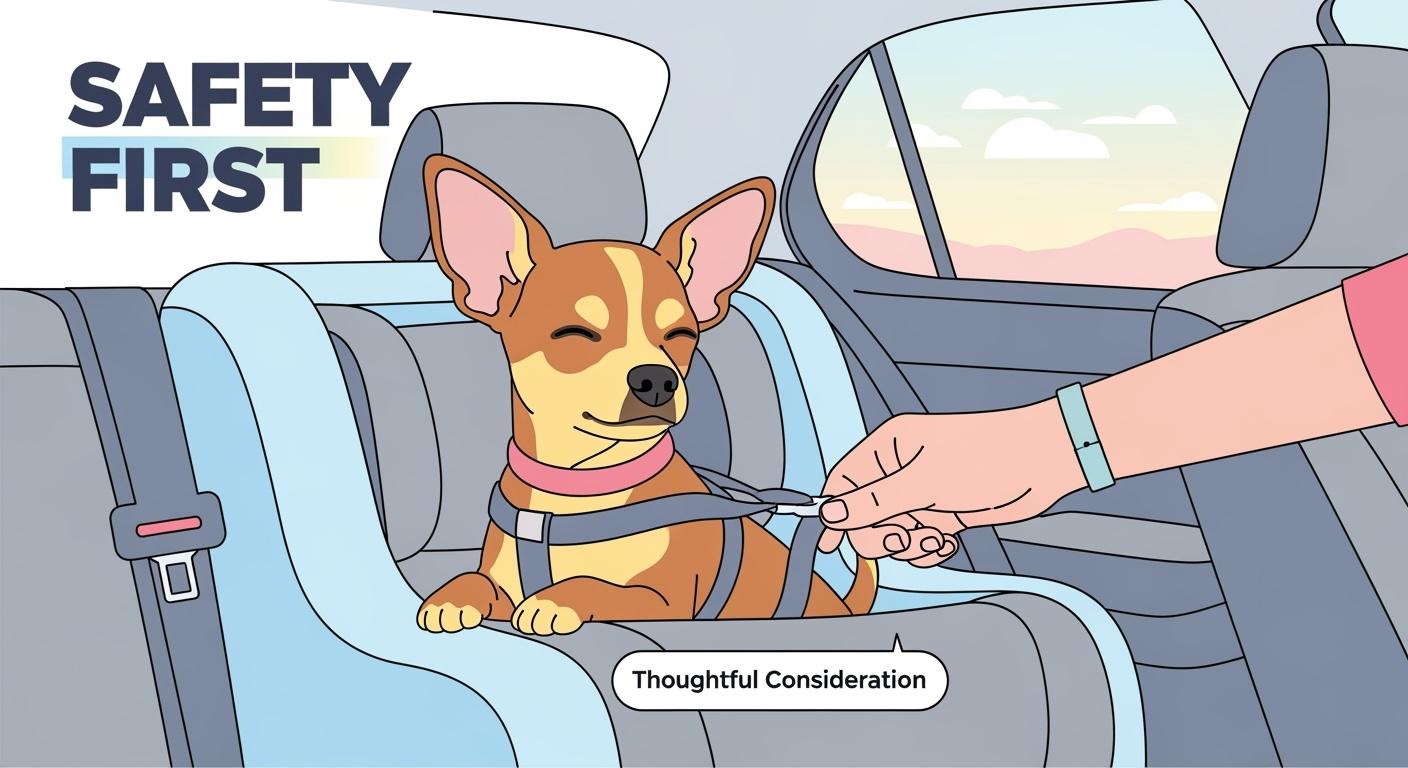
- The tether should connect to a well-fitted body harness, not a collar.
- The base should stay flat when pushed sideways by hand.
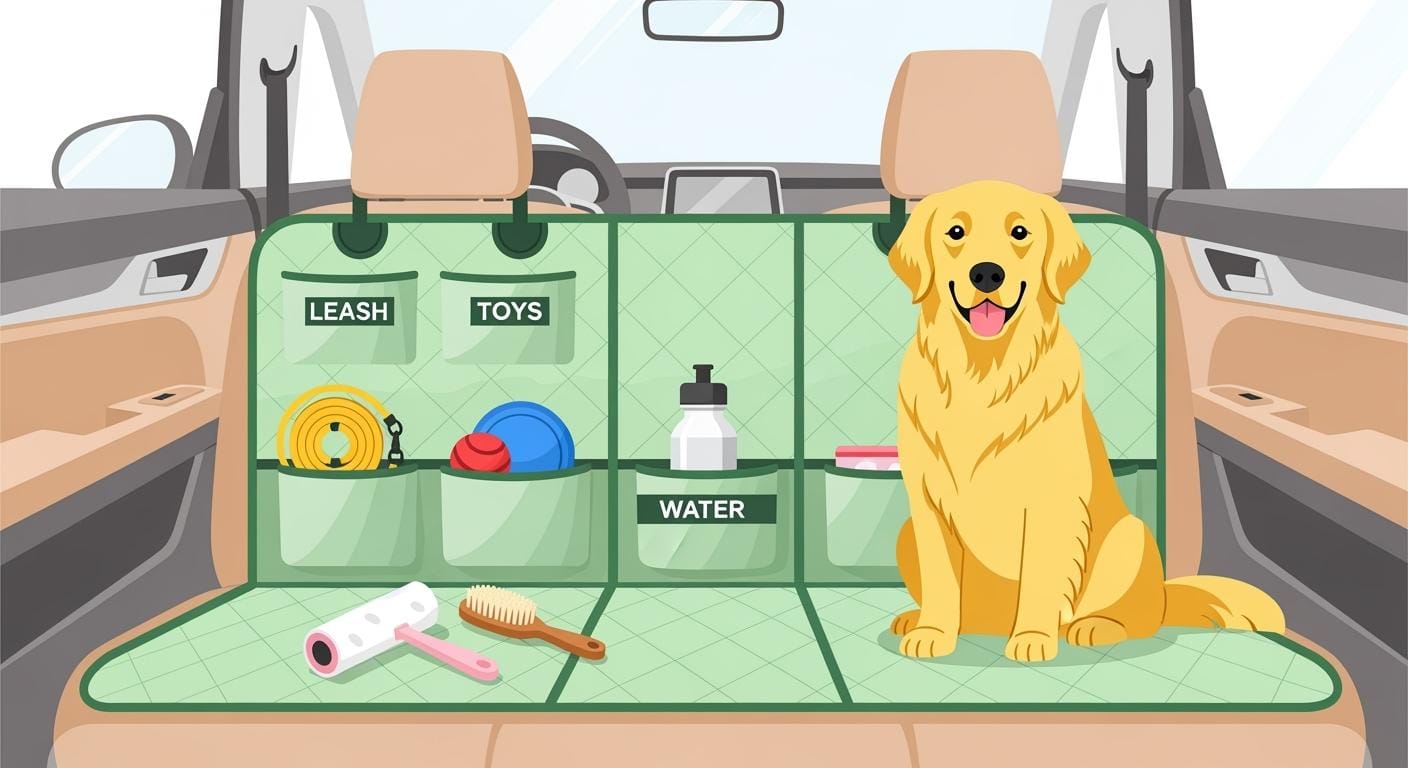
- The cover should be easy to remove, wipe, or wash before dirt settles into seams.
Where small dog car seats usually fail
Base size looks right but usable room is too small
Many small dog car seats are chosen by weight label first. That can be misleading. Small dogs with similar weight can have different body length, chest depth, leg length, and resting posture. A dog that curls tightly needs a different base shape from a dog that sits upright and leans into the side wall.
The usable base should support the dog while sitting, turning, and lying down. If hips, shoulders, or paws hang over the edge, the product may look compact but still feel unstable. If the base is too oversized, the dog can slide from side to side during turns and braking.
| Fit point | Better sign | Failure sign |
|---|---|---|
| Usable base area | The dog can sit, curl, and settle inside the seat. | Paws, hips, or shoulders hang over the edge. |
| Side wall height | The wall helps the dog stay centered without crowding the face. | The dog braces, pants, or leans awkwardly into the wall. |
| Entry height | The dog can step in without struggling or jumping hard. | The front edge is too high for daily loading. |
| View height | The lift is low enough for the base to stay stable. | The seat wobbles because the dog sits too high. |
| Tether path | The tether runs flat from the seat to the body harness. | The tether twists across the chest or pulls toward the neck. |
Fit should be checked after the dog has settled, not only when the seat is empty. Padding compresses, fur flattens, and some dogs sit taller once the car starts moving. That is why it helps to install the seat the right way and recheck the setup after a short first ride.
Setup details decide whether the seat stays useful
Rear-seat placement and stable routing matter more than extra height
For ordinary passenger vehicles, rear-seat placement is the safer default. It keeps the dog away from front airbags and reduces distraction near the driver. If a small dog car seat only looks stable when it is perched high, balanced near the console, or squeezed into an uneven spot, the product is not solving the right problem.
A car seat should work as a positioning and comfort aid. Words like “safety buckle” or “car seat” do not prove crash protection unless the product has clear test evidence. Without that evidence, judge the product by visible setup quality: whether the base sits flat, the straps stay tight, and the harness connection stays centered.
You need a dog car seat that does not move around. A stable base should not rock when pushed sideways by hand, creep across the upholstery during turns, or loosen after the dog shifts position.
Tether pull is one of the easiest problems to miss
A small dog car seat can look stable while the tether still pulls badly. If the tether is too long, the dog may climb, twist, or lean out. If it is too short or routed at the wrong angle, it can pull the body sideways or put pressure near the neck. The connection should stay centered on a body harness while still letting the dog sit and lie down naturally.
| Check item | Pass signal | Fail signal | Better product direction |
|---|---|---|---|
| Base stability | The seat stays flat when pushed. | The seat rocks, tips, or slides. | Use a broader footprint, better underside grip, or cleaner strap routing. |
| Dog posture | The dog can sit, curl, and settle naturally. | The dog braces, perches, or hangs over the edge. | Choose more usable base area and better wall height. |
| Tether routing | The harness connection stays centered. | The tether pulls toward the neck or twists the body. | Keep the clip path flat and use a body harness connection. |
| Entry and exit | The dog steps in without awkward jumping. | The dog slips, hesitates, or jumps hard over the front edge. | Use a lower entry edge or a wider opening. |
| Cleaning | The cover removes or wipes down easily. | Dirt and odor stay trapped in seams. | Use simpler surfaces, removable covers, and fewer dirt-catching gaps. |
Materials and structure affect comfort after the first ride
Soft padding can help, but too much padding can create new problems. Thick, warm sides may trap heat around a small dog. Deep seams can hold fur and odor. A weak floor can sag after the dog settles. A slippery underside can make the whole seat slide even when the upper cushion feels comfortable.
The stronger design is usually balanced rather than bulky: enough padding to reduce hard pressure, enough structure to hold the base shape, enough airflow to avoid heat buildup, and a cover design that can handle real travel mess.
| Real-use problem | Likely product cause | Better design choice |
|---|---|---|
| Dog keeps changing position | Cramped walls, heat buildup, or weak base support | More open side design, flatter base, and better airflow |
| Seat gets dirty fast | Deep seams, absorbent cover, or hard-to-remove liner | Removable cover, wipeable panels, and simpler seam layout |
| Seat collapses under the dog | Soft base without enough shape support | Firmer base layer with enough cushion on top |
| Dog slides inside the seat | Oversized base or slick inner fabric | Better size grading and a more controlled inner surface |
| Seat shifts on the vehicle seat | Narrow base, weak bottom grip, or loose strap path | Flatter footprint, non-slip underside, and cleaner belt routing |
Common mistakes and simple fixes
Most poor results come from the same mistake: choosing height and softness before checking base stability, usable space, tether path, and cleanup. A high booster shape can look appealing online, but if the dog needs to brace to stay balanced, the product is already failing in normal use.
| Problem | Likely cause | Fast check | Fix |
|---|---|---|---|
| Seat shifts in turns | Loose routing or narrow base | Push the seat sideways before driving. | Retighten straps or choose a broader, flatter base. |
| Dog stands to keep balance | Seat is too small, too tall, or too soft | Watch the first few minutes of the ride. | Lower the setup or use more usable base area. |
| Tether pulls toward the neck | Collar use or poor harness routing | Check the clip angle after the dog settles. | Use a body harness and keep the route flat. |
| Dog pants or keeps shifting | Poor airflow or crowded walls | Feel for trapped heat and watch body language. | Use a more open design and reduce excessive padding. |
| Cover becomes hard to clean | Absorbent fabric, deep seams, or trapped liner edges | Check how the cover opens before purchase. | Prioritize removable or wipe-clean surfaces. |
A calmer ride is a useful sign, but it does not prove better restraint. The product should still be judged by whether it fits the dog, stays stable on the rear seat, routes the tether cleanly, and remains practical after repeated cleaning.
FAQ
When should a more enclosed carrier be used instead of a booster-style seat?
A more enclosed carrier is better when the dog cannot stay centered in an open booster layout, keeps climbing the side walls, or needs more enclosure to settle during travel.
How short should the tether be?
The tether should be short enough to reduce twisting, climbing, and leaning out, but not so short that it pulls the body sideways or blocks natural sitting and lying down. The clip angle should be checked after the dog settles.
What matters more: a higher view or a more stable base?
A stable base matters more. A little height may help some dogs settle, but the seat works better when it stays flat and the dog does not need to brace against the wall for balance.